
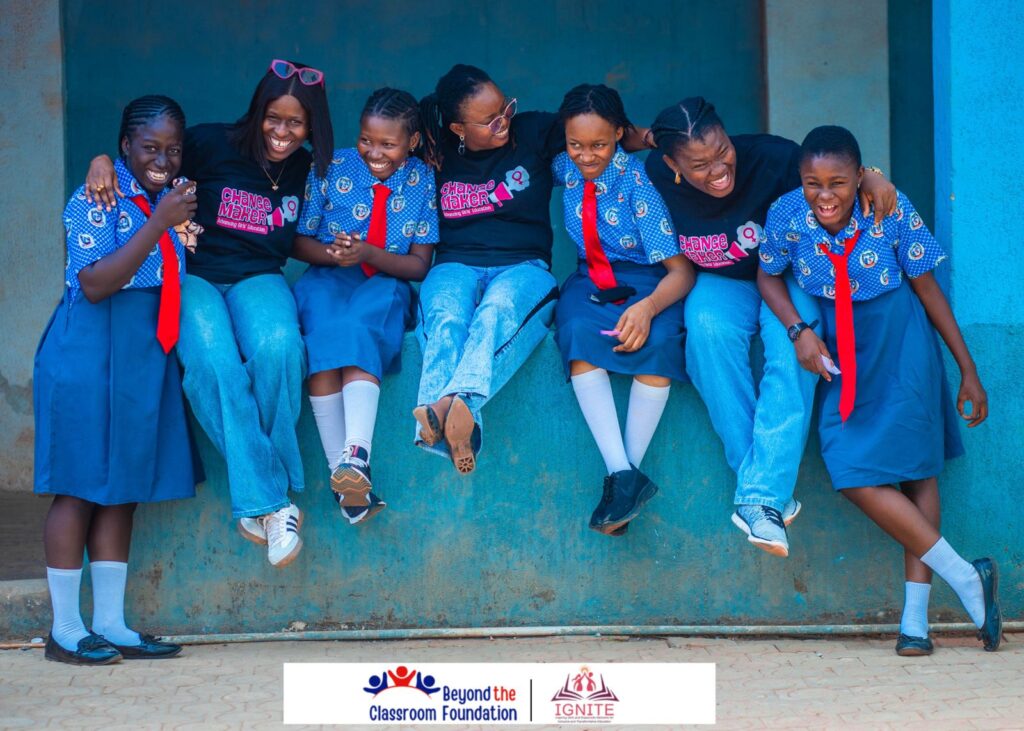
Adolescent girls today face a complex range of challenges that threaten their safety, wellbeing, and education. From online risks such as cyberbullying and unsafe social media interactions to offline threats including unsafe school and community environments, many girls remain vulnerable without proper guidance and support.
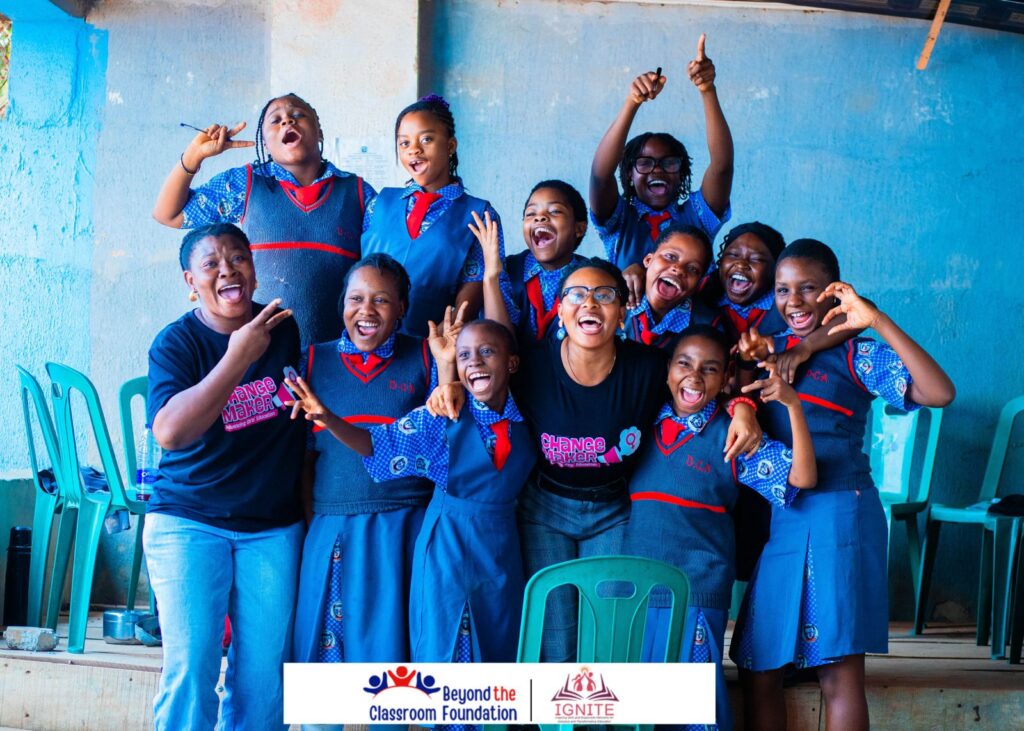
To address these issues, Beyond the Classroom Foundation implemented the Safer Girls Project 2.0, a four-day intensive program held from Monday, 2nd February to Thursday, 5th February 2026 across three schools in Durumi: Ecwa Academy, Durumi 3, and Destiny Child’s Scientific Academy, Gudu. Over 70 adolescent girls participated in the program, gaining knowledge, practical skills, and confidence to navigate both digital and real-world challenges effectively.
Supported by the IGNITE Consortium, the initiative builds on the success of the 2025 Safer Girls Project 1.0 in Kabusa and Bwari, expanding the program’s reach and reinforcing lessons on personal safety, self-esteem, and empowerment.
Program Highlights
- Online and Offline Safety Awareness: Girls were educated on responsible internet use, social media safety, cyberbullying, and personal data protection. Offline safety sessions focused on identifying risks in school and community settings and responding appropriately.
- Confidence and Leadership Workshops: Participants developed self-esteem, assertiveness, and decision-making skills through interactive exercises, role-plays, and group activities.
- Mentorship and Peer Learning: Girls connected with mentors and peers to share experiences, discuss challenges, and learn from each other in a supportive environment.
- Community and School Engagement: Teachers, administrators, and parents participated in sessions to support girls’ personal and academic development, learn strategies to maintain safe spaces, and reinforce lessons beyond the program.
Gloria Basil, Project Assistant for Events at Beyond the Classroom Foundation, reflected on the program:
“It was inspiring to see the girls engage so actively and ask questions about their safety and rights. Programs like this are essential to give them confidence and practical skills to navigate today’s challenges.”
Faith Okoro, Project Assistant and Executive Assistant to the Executive Director, added:
“Seeing the girls discuss, role-play, and learn together was amazing. Many of them left with a stronger sense of self-awareness and empowerment. This is exactly the kind of impact we hoped to achieve.”
Throughout the four-day program, participants demonstrated high levels of engagement in discussions, interactive exercises, and mentorship sessions. Teachers and mentors reported noticeable improvements in confidence, assertiveness, and willingness among students to address issues affecting their safety and education.
Raquel Kasham Daniel, Founder of Beyond the Classroom Foundation, emphasized the importance of the program:
“The Safer Girls Project 2.0 shows that when girls are given the right knowledge, tools, and support, they can navigate challenges safely and confidently. We are grateful to the IGNITE Consortium for enabling this program and proud of the impact we’ve been able to extend from Kabusa and Bwari to Durumi.”
The Foundation remains committed to expanding the Safer Girls Project to more schools across the Federal Capital Territory and beyond, ensuring that adolescent girls are equipped with the resources, mentorship, and supportive environment needed to thrive academically, socially, and personally.
About Beyond the Classroom Foundation
Beyond the Classroom Foundation is a nonprofit organization dedicated to creating safe and empowering environments for adolescent girls. Its programs, including Safer Girls, tackle teen pregnancy, school dropout, gender-based violence, and online safety, helping girls achieve their full potential.


More Stories
NGO Strengthens Maternal Healthcare Through Training for Lagos Health Educators
WILAN Leadership Institute Launches to Propel Women for Africa’s Transformation
Transforming Girls’ Education: Beyond the Classroom Foundation Launches ReIGNITE 3.0