
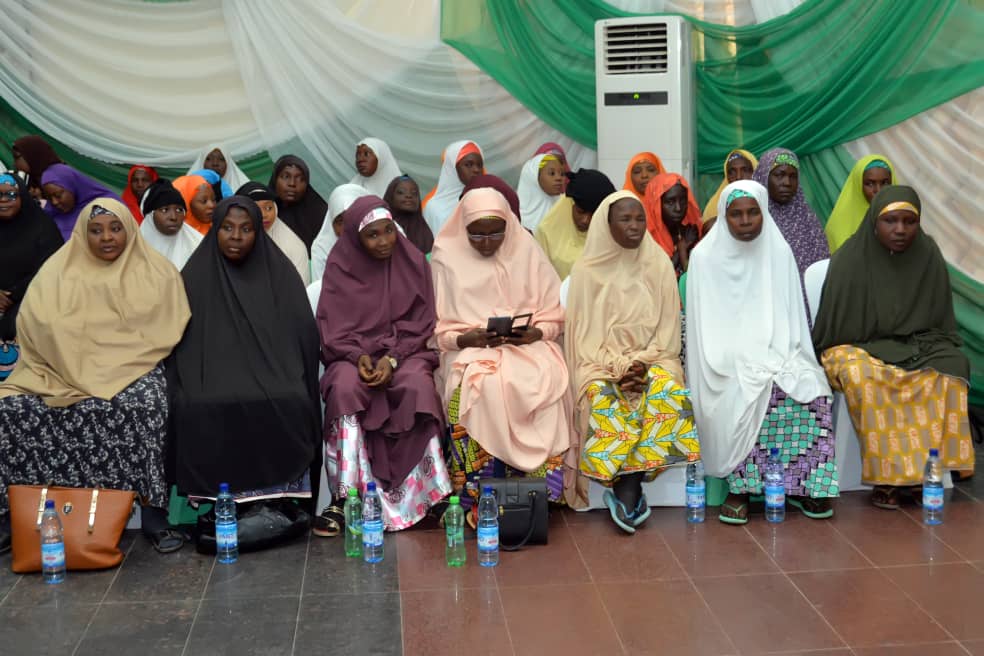
The Sustainable Women Economic Empowerment and Peace Initiative (BSWEEP), a non-governmental organisation, has intensified its efforts to advance women’s empowerment, peacebuilding, and girl-child education across communities in the Federal Capital Territory (FCT).
This was disclosed during a media engagement in Abuja by the Coordinator of BSWEEP, Hajiya Ruqayya Ibrahim-Kewa, who highlighted the organisation’s commitment to addressing Gender-Based Violence (GBV), expanding access to education for girls, and strengthening women’s economic independence.
According to Ibrahim-Kewa, BSWEEP has supported over 200 girls in Jiwa Community and 150 women across Internally Displaced Persons (IDP) camps and women’s groups through recent advocacy visits, skills-building initiatives, and community engagements. She explained that these interventions are aimed at empowering women economically while promoting peace and social cohesion at the grassroots level.
She further revealed plans to establish peacebuilding clubs in selected FCT schools, noting that the initiative is designed to promote understanding, tolerance, and dialogue among young people, while reducing the risk of conflict and violence in society.
“We have trained women in various skills to enable them to earn a livelihood and contribute meaningfully to the growth and development of society,” Ibrahim-Kewa said. “We have also supported improved access to girl-child education and peacebuilding initiatives as part of our contribution to national development.”
Also speaking at the engagement, Hajiya Fatima Abbas-Hassan, a veteran broadcaster and member of the BSWEEP technical team, stressed the critical role of the media in amplifying issues affecting women and girls. A former General Manager of NTA News24, Abbas-Hassan called for sustained media visibility to drive action and accountability.
“As beneficiaries of girl-child education, we feel a responsibility to give back,” she said. “There are many children who do not have the opportunity to go to school due to financial constraints, insecurity, or lack of parental support. Some parents, facing economic hardship, send their children to work as house helps instead of sending them to school.”
She described children as the future of the nation and urged stakeholders to invest in their education and wellbeing. “We must help them realise their full potential so they can contribute meaningfully to national development,” she added.
In her remarks, Hajiya Fatima Nuhu-Gidado, a gender advocate and member of the BSWEEP technical team, explained that the organisation is working closely with wives of traditional leaders to address GBV, eliminate harmful traditional practices, and promote girl-child education within communities.
She noted that engaging traditional institutions and community influencers remains key to driving long-term change, particularly in addressing deep-rooted cultural practices that negatively affect women and girls.
Through its multifaceted approach, BSWEEP continues to position itself as a strong advocate for women’s empowerment, peacebuilding, and the protection of girls’ rights across the FCT.


More Stories
NGO Strengthens Maternal Healthcare Through Training for Lagos Health Educators
WILAN Leadership Institute Launches to Propel Women for Africa’s Transformation
Beyond the Classroom Foundation Strengthens Safety and Empowerment for Over 70 Girls in FCT Schools Through Safer Girls Project 2.0