
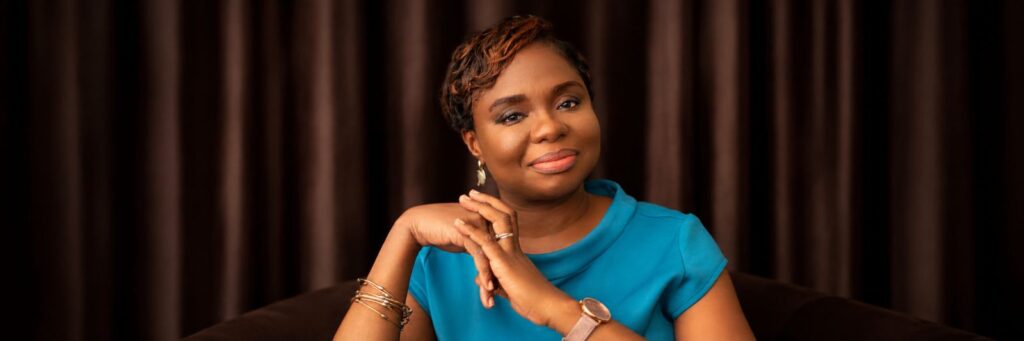
For nearly two decades, Adedolapo Osuntuyi has dedicated her life to expanding access to quality education for children in underserved communities. As the founder of Dolly Children Foundation and Dolly Stars School, she has worked to ensure that a child’s circumstances do not determine their future.
Her journey, which began as an undergraduate in 2006, has reached over 38,000 children across six Nigerian states, supported thousands of teachers, and mobilised resources for education and community development. She is also the convener of the Edufuture Conference and the author of Hearts & Hands: One Woman’s Journey to Creating a Better Future for Children.
In this interview with The Impact Journal (TIJ), Adedolapo reflects on the childhood conversation that shaped her purpose, the realities of building and sustaining a nonprofit organisation, the lessons behind establishing a tuition-free school, and her vision for a more equitable education system in Nigeria. She also shares practical advice for young people who want to build meaningful and sustainable change.
TIJ: Beyond the titles and achievements, who is Adedolapo Osuntuyi? What values and life experiences have shaped the woman you are today and kept you going through your journey?
Adedolapo Osuntuyi: Beyond the titles, I am simply a daughter who listened to her father one night and never forgot what she heard.
I was 13 when my father sat with me at midnight and told me about his childhood: the poverty he grew up in, the things he went without, and how close he came to never having the chance to become who he became. We ended that conversation in prayer. I didn’t have the words for it then, but something settled in my heart that night. I understood that a child’s beginning does not have to decide their ending, and that sometimes all it takes is one person who refuses to look away.
That conversation is the root of everything I do. It is why, as a second-year student at Lagos State University, I started what would become Dolly Children Foundation, long before I had money, structure or a plan. It is why, when I was posted to a remote village in Enugu State for my NYSC, I couldn’t just teach my biology classes and go home. I saw barefooted children in the only primary school in that village, and I had to do something about it.
At my core, I am a woman of faith. I believe every child carries a destiny, and that no child should ever be told their destiny does not warrant an education. My faith is not just what I profess; it is what has sustained me through seasons when the funding didn’t come, when the work felt too heavy, and when the need was far bigger than what I had in my hands.
The values that guide me are simple. Love, because children feel it before they understand it. Excellence, because children in underserved communities deserve the same quality as anyone else, not leftovers. And persistence, because real change in a community takes years, not months. I have learnt that showing up consistently matters more than showing up loudly.
My journey has also been shaped by learning. I changed my master’s focus from waste management to child health and social care because I wanted to understand children properly, not just help them out of passion. Working in child welfare in the UK showed me what systems can look like when children are truly protected, and I came home in 2012 determined to bring that standard back with me.
What keeps me going? The children. Especially on the days when I feel discouraged, I think of the faces of children whose stories once seemed hopeless and who are now thriving. Seeing them gives me a joy I cannot fully describe, and it keeps me going. In each of them, I see my father’s story all over again: a difficult beginning that did not get the final say.
So, who is Adedolapo Osuntuyi? To the children, I’m Aunty Dolly. I’m a proud daughter of Ekiti, a teacher at heart, and a woman who believes deeply that love, when put to work, can change the course of a child’s life, and through that child, a whole community.
TIJ: You founded Dolly Children Foundation in 2006 while you were still an undergraduate. What inspired you to start, and what have been the biggest lessons and challenges in building and sustaining the organisation over the years?
Adedolapo Osuntuyi: The seed was planted that night with my father, but it was confirmed not long after, when I came to know the story of my secondary school friend, Grace. Grace had fled Liberia as a child during the civil war. She watched both her parents drown on the journey to safety and survived captivity by eating grass. She arrived in Nigeria with nothing, and was received by an orphanage that educated her from primary school through university, made possible by an Australian sponsor who believed that a child they had never met deserved a future. Despite everything she had endured, Grace was one of the brightest students in our set.
Her story taught me something I would see again and again: a child’s circumstances can be devastating, but they do not have to determine that child’s future. Sometimes, what changes everything is simply that someone chooses to believe that child deserves a chance.
I carried that lesson with me to Lagos State University. As a second-year student, I began to notice children around me who were out of school, or in school but without what they needed to stay there. I thought of my father. I thought of Grace. I didn’t have money or connections. All I had was a conviction that I could not keep seeing these children and do nothing. So in 2006, I started, small and simple, with whatever I had. By 2009, we were officially registered as Dolly Children Foundation.
Looking back, those early years were really my training ground. My NYSC year in a remote village in Enugu State taught me that you don’t need a big budget to make a difference, but you do need to be present and to listen to the community. Later, my master’s in child health and social care and my years working in child welfare in the UK taught me structure, safeguarding, and what it means to put a child’s wellbeing at the centre of every decision. When I returned to Nigeria in 2012, I redesigned our programmes in 2013 with all of that in mind.
The lessons
The first lesson is that passion starts the work, but structure sustains it. In the beginning, it was all heart. Over time, I learnt that if you truly love children, you must build systems around that love: proper records, accountability, clear programmes and a strong team. Today we run ten programmes, and that would be impossible on passion alone.
The second lesson is that communities must be partners, not just beneficiaries. When we started working in Magboro, I found 120 pupils learning in one classroom. We began a school building project in 2015, and in 2019 we gave the community’s only public primary school, which had existed since 1955, a fence, a school gate and signage, because the children were not safe. Since we adopted the community, we have gone on to provide toilets and school furniture, pay school fees, run reading clubs, distribute back-to-school supplies, and build a toilet facility for a neighbouring school. We have also kept sponsoring children from primary school all the way to tertiary institutions. These things worked because the community trusted us and walked with us. That trust took years to build, and I don’t take it for granted.
The third lesson is that it is not about how many activities you do, but how many lives truly change. I have become much more intentional about measuring impact, about asking not just “what did we do?” but “what is different for this child now?”
The fourth lesson is consistency. Real change takes years. Some of the children we met in our early days are now adults living lives they once could not imagine. That only happens when you keep showing up.
The fifth lesson is to document the journey well. For many years, we did the work but didn’t always capture it. I have learnt that every child’s story, every milestone and every intervention must be properly recorded, with care and with respect for the child’s dignity and privacy. Good documentation helps us see what is truly working, keeps us accountable to our supporters, and allows us to tell our story with evidence, not just emotion. A child’s journey that is well documented becomes a testimony that can open doors for many more children.
The challenges
The biggest challenge has always been funding and sustainability. Much of our work depends on the generosity of sponsors, partners and friends who believe in the vision. Over the years, Dolly Children Foundation has birthed new initiatives, such as Dolly Stars School, our free-tuition school, amongst others, and each one requires steady resources to keep running. There have been seasons when I didn’t know where the next support would come from, and in those moments my faith carried me.
The second challenge is that the need is far greater than what we can currently meet. One particular community we work in, home to tens of thousands of households, depended for decades on just one public primary school. We have children on a waiting list, and it is painful to know there are children waiting for a chance we cannot yet give them.
There is also the personal cost. Building an organisation for nearly two decades requires sacrifice, of time, comfort and sometimes personal resources. But I have never regretted it.
What I have come to understand is that God never asked me to carry the whole weight alone. Every time the burden felt too heavy, the right partner, the right volunteer or the right supporter showed up. That is how Dolly Children Foundation has lasted this long, and it is how I believe it will keep growing, until our model of holistic education reaches children in underserved communities across Africa.
TIJ: In 2023, you founded Dolly Stars School, a tuition-free school model. What gap were you hoping to address, and what has the experience taught you about providing quality education for underserved children?
Adedolapo Osuntuyi: In one of the communities we serve, home to thousands of households, there was only one community primary school, a school founded in 1955 that had never grown. When I first walked through its entrance, there was no gate, no fence, no boundary that said this place belongs to children. Area boys had sold more than half of the school land. One classroom. 120 pupils. Two blackboards. No toilet. No office for teachers. And hundreds more children in that community had never been inside a classroom at all, invisible to every register, every system, every intervention.
Through Dolly Children Foundation, we did everything we could from the outside. We donated furniture and books, built a fence and a gate, ran reading clubs, paid school fees and provided school supplies. But every time we went back, the gains had slipped. The system was never built to sustain change.
That was when I knew we had to do something different. Supporting a broken system was not enough; we needed to build a model that could hold change in place. Dolly Stars School was born from that conviction in 2022: a tuition-free school where children who had been overlooked would receive the kind of quality education that children in privileged homes take for granted. Today, we provide free, holistic education to over 120 learners between the ages of 3 and 16. Many of them are being raised by single parents, and some are orphans. And we still have children on our waiting list.
What the experience has taught me
The first thing it has taught me is that free must never mean low quality. There is a quiet assumption that whatever is given to children in underserved communities should simply be “good enough.” I reject that completely. Our learners deserve trained teachers, well-planned lessons, books, a safe environment and high expectations. When you raise the standard, the children rise to meet it.
The second lesson is that people are the heart of quality education. Buildings and materials are important, but it is the teacher in front of the child, and the team behind that teacher, that make the real difference. I hold dearly to a philosophy: when you take care of your team, they will take care of the job. That is why I don’t joke with investing in the wellbeing and welfare of our team, their training, their growth and their sense of purpose. It has enabled them to give their very best, and it has given me peace of mind. I am deeply grateful, because I have watched them go above and beyond to serve, even when they didn’t have to.
The third lesson is that we must educate the whole child. Many of our learners come to us carrying more than their school bags. For a child growing up with one parent, or without parents at all, school must be more than a place to learn; it must be a place to belong. So our approach goes beyond academics. Through counselling, food support, reading, sports, chess, crafts, entrepreneurship, excursions, mentorship and character building, we meet children’s needs, help them discover their gifts, build confidence and believe that their future is bright. A child who feels seen learns differently.
The fourth lesson is that families are partners in the journey. Many of our parents and guardians are carrying heavy responsibilities alone. When they see their children reading, speaking with confidence and dreaming bigger, their own hope is renewed. Walking closely with families has strengthened everything we do in the classroom.
The fifth lesson is that quality education costs money, and someone has to believe it is worth it. Running a tuition-free school is not cheap. Every term requires careful planning and the generosity of sponsors and partners. But when I compare what it costs to educate one child for a year with what that child could become, I know it is one of the best investments anyone can make.
Perhaps the most beautiful thing I have seen is the children giving back. Recently, young people whose education we have supported for years volunteered to repaint Dolly Stars School and our community office. Watching them work, I was reminded that when you invest in a child, you don’t just change one life; you raise someone who will turn around and lift others.
That, for me, is what quality education for underserved children should look like: not charity, but opportunity, given with excellence and dignity.
TIJ: You convene the Edufuture Conference, bringing together educators, policymakers, and other stakeholders. What do you believe needs to change in Nigeria’s education system to ensure that every child has access to quality education?
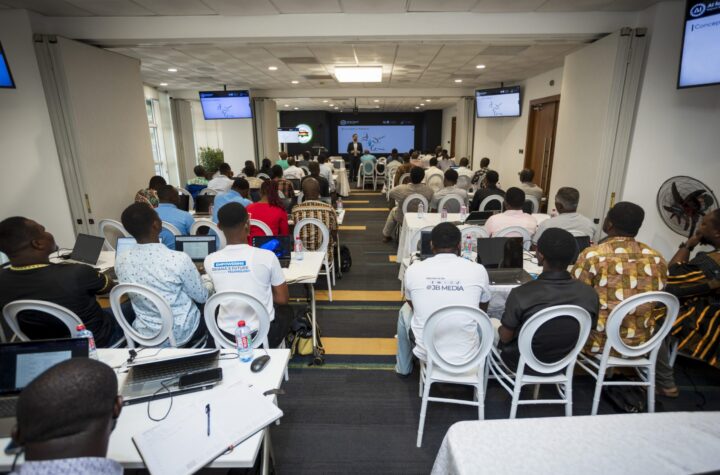
Adedolapo Osuntuyi: I started the Edufuture Conference because I realised that no single organisation, however committed, can fix education alone. The children we serve are affected by decisions made in rooms they will never enter. So I wanted to create a room where educators, policymakers, funders, civil society and communities could sit together, listen to one another and commit to action. Our 2026 theme, Scaling Equity: Building Education Systems That Leave No Child Behind, captures what I believe must change.
First, we must see every child. Too many children in Nigeria are invisible to the system. They are not on any register, not counted in any plan, and so they are not served by any intervention. You cannot plan for a child you have not counted. Every community must know how many children it has, how many are in school, and how many are truly learning.
Second, we must invest in teachers. No education system can rise above the quality of its teachers. Our teachers need continuous training, fair pay, good working conditions and the respect their work deserves. Over the years, our work has trained more than 2,500 teachers, and I have seen first-hand what happens when a teacher feels valued and equipped: the whole classroom changes.
Third, we must move from access to learning. Getting children into school is only the first step. Many children sit in classrooms for years without learning to read with understanding. We must place strong emphasis on foundational literacy and numeracy, because a child who cannot read is locked out of every other subject.
Fourth, we must build systems that sustain change. Too often, interventions come as one-off projects. A school is renovated, furniture is donated, and a few years later everything has slipped back. I have seen this myself. We need maintenance plans, accountability and community ownership, so that progress is protected long after the ribbon is cut.
Fifth, we must educate and protect the whole child. A child who is hungry, unsafe or carrying trauma cannot learn well. Schools must be safe spaces, with strong safeguarding and child protection, counselling, and support for children’s wellbeing. Children’s rights must be at the centre of education, not an afterthought.
Sixth, we must close the gap between policy and practice. Nigeria does not lack good policies; what we often lack is implementation. Budgets must reach classrooms, plans must be monitored, and leaders must be accountable for outcomes, not just announcements.
Finally, we must collaborate. Government cannot do it alone, and neither can non-profits, private schools or donors. When government, the private sector, civil society, faith communities and parents work together, with each playing its part, we can reach children that no one sector could reach on its own.
My dream is a Nigeria where a child’s family income or circumstances do not decide the quality of education they receive. That future is possible, but only if we stop treating education as charity and start treating it as every child’s right and our nation’s most important investment. That is the conversation Edufuture exists to keep alive, and it is the work I have given my life to.
TIJ: You are the author of Hearts & Hands: One Woman’s Journey to Creating a Better Future for Children. What inspired you to write the book, and what do you hope readers will take away from your story?
Adedolapo Osuntuyi: People often asked me, “How did you start, and how do you keep going?” I realised that the story behind the work mattered just as much as the work itself. The book highlights the different experiences that shaped my journey, from a midnight conversation with my father, to my friend’s story, my NYSC year in a remote village, and my years in child welfare in the UK, and how each one led me to the work I do today.
I also wrote it for anyone who feels a burden for something bigger than themselves but thinks they are too young, too ordinary or too under-resourced to begin. I started Dolly Children Foundation as an undergraduate with nothing but conviction.
The title says it all. The heart is compassion, the ability to truly see a child. The hands are action, the willingness to do something about what you have seen. Real change happens when both work together.
I hope readers take away that you can start with what you have, that every child matters regardless of their background, and that challenges are part of the journey, not a reason to stop. Most of all, I hope they close the book and ask themselves, “What can my own hands do?”
TIJ: You have spent years working directly with communities and children, and you are now deepening your focus on education policy and governance. How do you hope to use your experience on the ground to influence broader changes in Nigeria’s education system?
Adedolapo Osuntuyi: For years, I have seen what happens when policies made far away meet the reality of a classroom. A policy may look good on paper, but if it does not reach the child sitting in an overcrowded classroom, it has not done its job. My time at the School of Politics, Policy and Governance helped me understand how decisions are made, and I now want to stand in the gap between the policy room and the community.
First, I want to bring the voices of children and communities into policy conversations. Too often, the people most affected by education decisions are the least consulted. My experience on the ground allows me to speak for children who would otherwise never be heard in those rooms.
Second, I want to use evidence to influence decisions. Every child’s story we have documented, every intervention we have tracked, is data that can shape better policies. Real change must be built on what actually works, not on assumptions.
Third, I want Dolly Stars School to serve as a proof of concept. It shows what quality, holistic education for underserved children can look like. My hope is that government and partners can learn from it and adapt it to reach many more communities across Nigeria and Africa.
Fourth, I want to champion child rights and safeguarding as a core part of education policy, because a child who is not safe cannot learn.
Through platforms like the Edufuture Conference, I will keep bringing policymakers, educators and communities to the same table. My goal is simple: that the lessons we have learnt in one community can become solutions for millions of children.
TIJ: You have trained and supported over 2,500 teachers. What do you believe teachers need most to help children learn effectively, and how can we better support them in Nigeria?
Adedolapo Osuntuyi: In all my years of working with teachers, one thing has become clear to me: a child’s learning will rarely rise above the teacher in front of them. If we want children to learn well, we must take teachers seriously.
What teachers need most
First, practical, continuous training. Many teachers were trained once and then left on their own for years. Teaching is changing, and children are changing. Teachers need ongoing, hands-on training that helps them teach reading, manage classrooms and reach every child, including those who are struggling.
Second, welfare and dignity. A teacher who is underpaid, overworked and worried about how to survive cannot give their best. Fair pay, good working conditions and genuine respect for the profession are not luxuries; they are the foundation of quality education.
Third, the right tools. Teachers need books, teaching materials and manageable class sizes. No teacher can give individual attention to a hundred children in one classroom.
Fourth, support for their own wellbeing. Teachers often carry the emotional weight of the children they teach. They need encouragement, mentorship and a community of fellow teachers to learn from and lean on.
How we can better support them
Government must invest in teacher training and welfare, and make sure that investment actually reaches the classroom. The private sector and development partners can sponsor training, provide resources and reward excellent teachers. Communities and parents can show teachers the honour they deserve. And teachers must be given a seat at the table when education policies are made, because no one understands the classroom better than they do.
When we invest in teachers, we invest in every child they will ever teach. That is why, at Dolly Children Foundation, we believe that supporting teachers is one of the most powerful ways to change a child’s future.
TIJ: Your work has involved mobilising over ₦185 million in cash and kind for education and community initiatives. What have you learnt about building partnerships and mobilising resources for social impact?
Adedolapo Osuntuyi: The biggest lesson I have learnt is that people don’t give to organisations; they give to a vision they trust.
That trust is built through accountability. Every gift must be used for exactly what it was given for, and partners must be kept informed. When they see their support well managed, they come back, and they bring others with them.
I have also learnt that impact must be shown, not just told. Documenting children’s progress and sharing real outcomes has opened more doors than any proposal ever could.
Partnerships are relationships, not transactions. Some of our partners have walked with us for many years because we treat them as family. We celebrate them and we say thank you, often.
Finally, every kind of support matters. Books, paint, furniture, skills and volunteer time have been just as valuable as cash. Building support from many sources, individuals, churches, corporate partners and in-kind donors, has kept us steady even in difficult seasons.
When you are faithful with little and treat people with integrity and gratitude, resources will follow the vision.
TIJ: Many young people want to make a difference through the nonprofit sector but struggle with where to begin, funding, and sustaining their work. What advice would you give someone starting out today?
Adedolapo Osuntuyi: Start with what you have. I started Dolly Children Foundation as an undergraduate with no money and no connections, only a conviction. Don’t wait for perfect conditions. Start small, start where you are, and let it grow.
Know your “why”. There will be hard days, and on those days, passion alone will not keep you going. A clear sense of purpose will.
Listen before you act. Spend time with the community you want to serve. Understand their real needs, not what you assume they need. The best solutions come from the people closest to the problem.
Build structure early. Register properly, keep good records and be accountable for every naira. Integrity is your greatest asset when it comes to funding.
Document everything. Tell your story with evidence. Partners support what they can see.
Don’t go it alone. Find mentors, build a team, take care of them, and partner with others who share your vision. Collaboration will take you further than competition.
Be patient and consistent. Real impact takes years, not months. Keep showing up.
Finally, keep learning. Every season of my journey, from my NYSC village to the UK to the policy training, has taught me something new. Stay humble, stay teachable, and never lose sight of the people you set out to serve.
TIJ: After nearly two decades of working to improve children’s lives through education, what does success look like to you now, and what do you hope your work will make possible for the next generation?
Adedolapo Osuntuyi: To me, success is seeing a child who was once overlooked stand confidently and speak about their dreams. It is watching young people we sponsored from primary school graduate from university, and then come back to volunteer, mentor and give to the next set of children. When the children we once supported begin to lift others, I know the work is truly working.
Another view of success for me is building something that outlives me: a foundation and a school that will stand strong for generations, supported by systems that sustain change.
For the next generation, my hope is bigger than one school or one community. I hope our model of holistic education will be adapted and replicated across underserved communities in Nigeria and Africa. I hope that one day, no child will be told their destiny does not warrant an education, and that a child’s background will no longer decide the quality of their future.
Many years ago, my father told me his story at midnight, and it changed the course of my life. My greatest hope is that the children we serve will one day tell their own children a different story: not of what they lacked, but of how someone believed in them, and how they rose.
More Stories
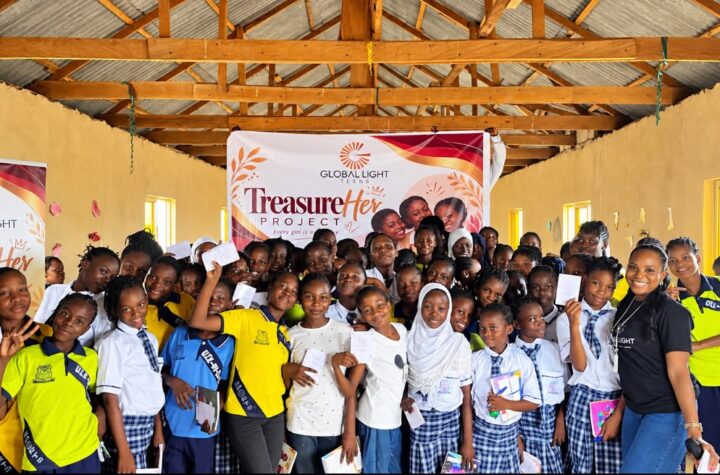
GLTeens Reaches Girls in Ikorodu Through TreasureHer School Outreach
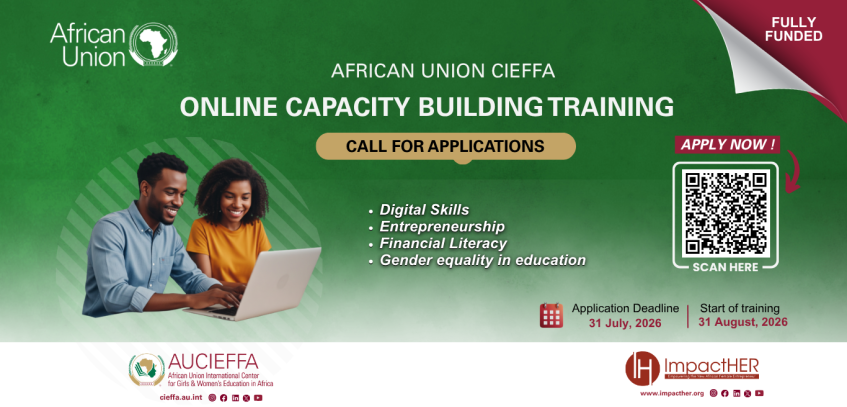
African Union and ImpactHER Launch Free Digital Skills Programme for Women and Young Africans
ITU, Google Launch AI and Robotics Training Programme for 20,000 African Students