
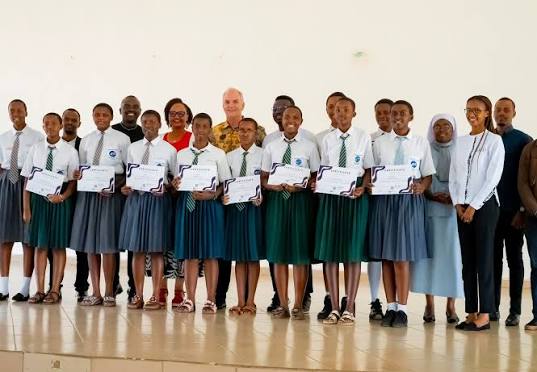
Education stakeholders from across Africa have gathered in Nairobi for the Fourth International Conference on Girls’ Education in Africa, with Kenya calling for stronger investment in girls’ education, particularly in science, technology, engineering and mathematics (STEM).
The two-day conference, taking place from November 17 to 18 at the Argyle Grand Hotel Nairobi, is organised by the Forum for African Women Educationalists (FAWE) under the theme Investing in Her Future: Accelerating Gender-Transformative Education for African Girls Through Sustainable Financing and Innovation.
Speaking at the opening of the conference, Kenya’s Education Cabinet Secretary, Julius Ogamba, said efforts to improve girls’ education must go beyond school enrolment to address the barriers that affect their ability to complete their studies and pursue careers in technical fields.
He highlighted Kenya’s Competency-Based Education (CBE) system as an opportunity to expand girls’ participation in STEM through senior school pathways that allow learners to pursue subjects aligned with their interests, abilities and career ambitions.
However, he noted that curriculum reforms alone would not be sufficient. Girls also need access to quality teaching, learning resources, mentorship and financial support to remain in school and compete for opportunities in technical fields.
Ogamba also emphasised the importance of combining scholarships with mentorship and psychosocial support, particularly for learners from disadvantaged backgrounds. He highlighted school re-entry measures as an important way of ensuring that interruptions to a girl’s education do not permanently exclude her from learning.
The conference brings together policymakers, educators, researchers, youth leaders, civil society organisations, development partners and private-sector representatives to examine how education systems across Africa can become more inclusive and responsive to girls’ needs.
Its discussions are structured around four key areas: sustainable financing for gender-transformative education, youth participation in education policy and financing, technology and digital innovation, and partnerships and accountability.
Participants are expected to explore ways of mobilising domestic resources, strengthening gender-responsive budgeting, expanding access to digital learning and ensuring that girls have a meaningful role in decisions affecting their education.
The conference also seeks to address the persistent gender digital divide, unequal access to STEM opportunities and the challenges facing girls in rural, fragile and underserved communities.
According to the organisers, the gathering is intended to move beyond discussions towards practical commitments, youth-led action plans, policy and financing recommendations, and stronger partnerships to advance girls’ education across the continent.
FAWE, a pan-African organisation working to promote girls’ and women’s education, holds the conference as a continental platform for bringing together stakeholders to strengthen policies, investment and accountability in education.
The event is expected to conclude on November 18 with renewed calls for governments, development partners and other stakeholders to translate commitments into sustained investment and measurable improvements in educational opportunities for African girls.

More Stories
Two Boys Lead Ambassadors Receive A.D. King Honorary Global Leadership Award
AWIEF 2026 Brings African Women Entrepreneurs Together to Push for Greater Access to Capital and Markets
WACSI Launches 18-Country Study Examining the Influence and Challenges of African Women’s Movements