
Artificial intelligence is moving rapidly into education, but much of the technology being developed for classrooms is still designed around experiences, data and assumptions from outside Africa.
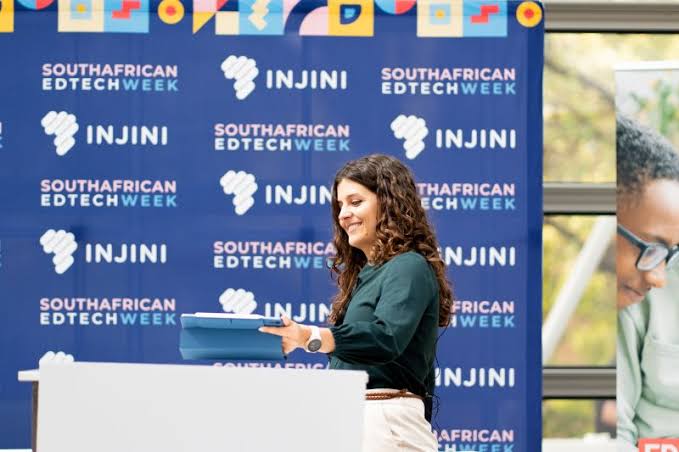
Krista Davidson, executive director of South African nonprofit Injini, wants to change that.
Injini has launched an eight-month AI for Education venture builder and incubation programme designed to help African teams develop technology specifically for the realities of classrooms across the continent. The programme is supported by philanthropic funder Coefficient Giving and will work with 12 pre-formed teams from the early idea stage through product development and real-world testing.
The programme is built around a straightforward question: what would happen if the people who understand African education problems best were given the resources to build the technology themselves?
For the first five months, participating teams will work through problem validation, customer research, solution design and the development of functional AI-powered minimum viable products. They will then test those products through live pilots to generate evidence about how they perform in real educational environments.
The strongest teams will move into a further three-month incubation phase. Five ventures will receive equity-free seed funding of US$25,000 each, alongside support to develop their products, strengthen their business models and prepare for market entry.
For Davidson, the programme addresses two problems at the same time.
The first is the shortage of locally relevant technology for African classrooms. The second is the shortage of opportunities for people who understand those education challenges to turn their knowledge into scalable technology companies.
Injini has spent years working across education innovation in Sub-Saharan Africa. Founded in 2017, the Cape Town-based nonprofit operates as an ed-tech incubator, accelerator and think tank focused on improving the quality, accessibility and relevance of education in the region.
Its new programme takes that work further by putting artificial intelligence at the centre of the venture-building process.
Rather than waiting for established technology companies to adapt their products to African markets, Injini is creating a pipeline for locally informed teams to develop new solutions from the beginning.
That distinction could become increasingly important as AI becomes embedded in education. Tools built without sufficient understanding of local curricula, languages, teacher workflows, infrastructure limitations or student needs can struggle to translate effectively into African classrooms.
Davidson has argued that Africa is already underrepresented in the data used to train many AI systems. The concern is that if African educators, entrepreneurs and technologists do not participate more actively in building AI products now, schools could eventually be using tools that were never designed around their realities.
The programme is therefore not simply an accelerator for AI startups. It is an attempt to influence what gets built in the first place.
Participating teams must be based in South Africa, Botswana, Eswatini, Lesotho, Malawi, Mozambique, Namibia, Zambia or Zimbabwe, with applications open until September 27.
The focus on pre-formed teams is also deliberate. Injini is looking for people who already understand a problem and can work together to build a solution, rather than simply selecting individuals with an interest in artificial intelligence.
For the teams that make it through, the programme could provide something that early-stage African founders often struggle to access: the combination of technical support, real-world testing, mentorship and early capital needed to move from an idea to a functioning product.
But the bigger experiment is whether those teams can demonstrate that AI can solve actual problems in African classrooms rather than simply add another layer of technology.
If successful, Injini’s model could produce more than a handful of ed-tech startups. It could help create a generation of African technology companies building educational tools around the continent’s own classrooms, teachers and learners.
For Davidson, that is ultimately the opportunity: ensuring that as AI reshapes education, Africa is not merely a consumer of the technology, but one of the places where the technology is designed, tested and built.




More Stories
YHLDI to Mark International Day of the Girl Child With Girls’ Empowerment Event in Ondo
Beyond Enrolment: MAYEIN Calls for Action on the Barriers Keeping Oyo Girls in School
HOW OWOLABI WILLIAMS IS HELPING BOYS BECOME THE MEN THEY ARE CAPABLE OF BECOMING