

There is something powerful about watching a girl begin to see possibilities for herself. Sometimes it starts with something very small. She asks a question. She takes responsibility for something. She discovers a skill. She realises that there are options beyond what she has always known. For Mayowa, that is where the real work begins.
Through Ashake Foundation, the organisation she founded and leads, Mayowa has spent more than a decade working with women and girls, particularly those whose circumstances have made opportunity harder to reach. But if you look closely at the work, you will see that it is not really about giving girls and women things. It is about helping them get to a place where they can do more for themselves.
A girl needs more than a sanitary pad. She needs the knowledge to understand her body, the support to stay in school and the opportunity to think seriously about the kind of future she wants. A woman needs more than a sewing machine or a small business grant. She needs the skills to use it, access to markets, financial knowledge, mentorship and the ability to make decisions about her own livelihood.
That thinking is at the heart of Ashake. The foundation works across women’s economic empowerment, education, health and hygiene, leadership and rights awareness. It has supported more than 2,500 widows and 5,000 children, while more than 2,000 women have gone through its skills-development programmes. Its support has included business start-up kits, microcredit and interest-free loans, scholarships, school supplies, mentorship and practical vocational training.
And then there is the work with girls. Through its Girls in Local Action programme, girls move from listening and learning to leading and eventually taking action in their own communities. They receive leadership and self-esteem development, menstrual hygiene education, mentorship, vision-building support and opportunities to work on community projects. More than 1,500 girls have been reached with sanitary supplies and leadership sessions through the programme.
The distinction matters. Because telling a girl to “be confident” is easy. Creating the conditions that allow her to become confident is much harder. Sometimes that means giving her information she has never had. Sometimes it means putting her in a room where she can practise leadership. Sometimes it means connecting her to a mentor. And sometimes it means giving her a practical skill that changes what she believes is possible for her economically.
That has always been part of how Mayowa thinks about development. Even her approach to skills training reflects it. Ashake’s Nwa-Girl apprenticeship model is built around practical learning. Instead of simply bringing women into a classroom, teaching them a skill and sending them home with a certificate, the model places them close to people who already know the skill. There is practical experience, proximity to trainers and continued mentorship, with the bigger goal of helping women turn what they learn into sustainable livelihoods.
Because, really, what happens after the training? That is the question. Can she actually make money from the skill? Can she find customers? Can she price her work? Can she manage what she earns? Can she grow? Can she eventually teach somebody else?
For Mayowa, the intervention cannot end at “we trained 50 women.” The more important question is what those women are able to do with what they have learned.
That way of thinking did not begin with Ashake. Long before she founded the organisation, Mayowa was already learning what it meant to create opportunities for other women.
In 2008, while serving as President of the JCI Nigeria LASU Chapter, Mayowa became the first female chapter president after more than a decade without female leadership in the chapter. But what she did with that position is perhaps more important than the fact that she got it. She deliberately trained and exposed more than 15 young women to leadership opportunities. Ten of them later became chapter presidents themselves.
That tells you something about Mayowa. She is not particularly interested in being the only woman who gets through the door. She wants more women coming through behind her.
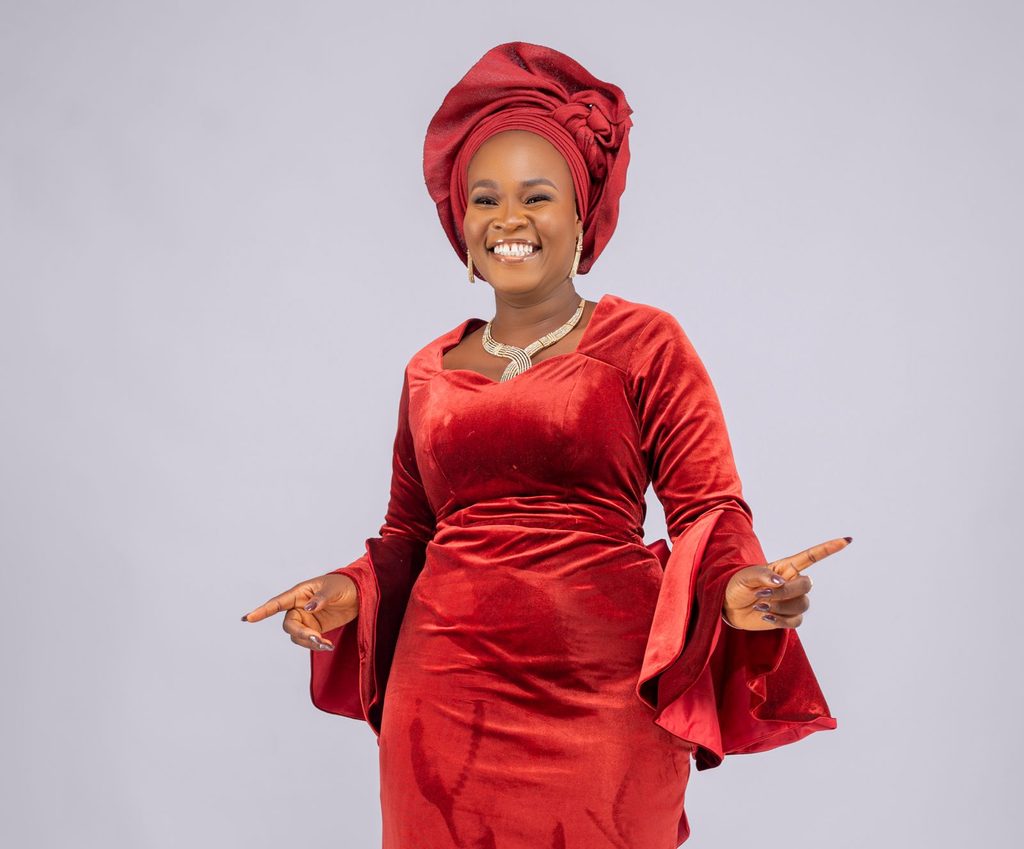
Her leadership philosophy is simple: leadership is not just about occupying a position. It is about creating other leaders who can take responsibility after you.
And when you know what Mayowa was like before that experience, the story becomes even more interesting.
Because the woman who now spends so much time helping girls find their voices once had to work through her own insecurities. Mayowa has spoken openly about growing up with a deep sense of inferiority. She has described herself as a stammerer and has written about the mistakes and self-doubt that shaped parts of her early adult life.
She grew up in Ijagemo after being born in Surulere. As a university student, money was tight. She has recalled her mother sending her ₦5,000 every two weeks and how carefully she had to manage it.
But there was also a determination in her. She has written about making up her mind that she would not end up where her environment wanted her to. She would build her own path.
Then came JCI.
Someone suggested that she should lead the chapter at a time when it needed new leadership. For a young woman who was still battling insecurity, that was no small ask.
But she stepped forward.
And something changed.
The young woman who once doubted herself became the person creating opportunities for other young women to lead. One of the young people she helped develop would eventually become National President of JCI Nigeria.
That is why it is difficult to separate Mayowa’s personal story from the work she now does with girls. She understands what it means to have an opportunity before you feel fully ready for it. She understands the difference one person can make by simply saying, “You can try.”
And perhaps that is why she is so intentional about helping girls see beyond their immediate circumstances. She has spoken about wanting girls to understand that they can be more than what their environment tells them they can be.
That is a big part of what Ashake is trying to do.
Because the barriers facing many of the women and girls Mayowa works with are not simply about a lack of ability. Sometimes it is money. Sometimes it is information. Sometimes it is the absence of a network. Sometimes it is not knowing where to start. Sometimes it is having the skill but not knowing how to turn it into income. And sometimes it is simply never having had anyone show you that there are other possibilities.
Mayowa knows the importance of that person. So she has built programmes that try to become that bridge for others.
Ashake’s women-focused initiatives have continued to combine vocational training with entrepreneurship, access to finance, mentorship and leadership development. Its skills programmes have trained thousands of women, while the Nwa-Girl approach is designed to connect skills acquisition to real livelihoods rather than treating training as the final destination.
There is also something very educational about the way Mayowa approaches development. Perhaps that should not surprise anyone.
She studied Educational Foundations and Counselling Psychology at Lagos State University, with English as a minor, and was recognised as Best Student Teacher in 2009. She later attended the Enterprise Development Centre at Lagos Business School and completed a Global Online MBA at ESMT Berlin in 2023.
But her story is not really about degrees. It is about what she keeps doing with the knowledge and opportunities she has received.
She has continued to find ways to turn them into opportunities for somebody else.
In 2014, Mayowa became one of ten finalists in Google Africa Connected, selected from more than 2,200 submissions from 35 Sub-Saharan African countries. The finalists received an additional US$10,000 each to expand their social and economic impact. Mayowa’s work had included using digital tools such as YouTube to mobilise support around widowed mothers and children, as well as Google Alerts to track information relevant to women.
In 2017, she was recognised by JCI Nigeria for Humanitarian and Voluntary Leadership among its Ten Outstanding Young Persons of Nigeria. In 2025, she was named among the Top 50 Women Voices in Development and the NGO Sector, recognised for her work in vocational training, microfinance, mentorship, leadership development and sustainable livelihoods.
But honestly, the awards are not the most interesting thing about Mayowa.
The pattern is.
Again and again, she seems to come back to one question: What would it take for this person to have more choices?
For a widow, it may be capital. For a woman learning a trade, it may be a market and someone who can teach her how to build a business around the skill. For a girl, it may be sanitary supplies, mentorship, a leadership session or simply a safe place to learn and ask questions. For a young woman who wants to lead, it may be one person saying, “I see something in you. Come and try.”
That question is also pushing Mayowa into new areas of work. Her interests now extend into technology, gender and inclusive economic development, including how responsible artificial intelligence and digital access could help underserved and rural women gain better access to information, markets and opportunities.
It is a new direction, but not really a different story.
It is still about access. Still about possibility. Still about helping someone move from simply surviving their circumstances to having more control over what comes next.
And maybe that is why Mayowa’s story resonates so strongly with the work she is doing today.
Because somewhere in all these programmes, statistics, trainings and interventions is the young woman she once was. The girl who had to learn that her circumstances did not have to define her. The young woman who was given a chance to lead and discovered that she could.
Now, she is trying to make sure other girls encounter those possibilities earlier.
Not every girl will become a social entrepreneur. Not every girl will become a chapter president. Not every girl will start a foundation.
That is not the point.
The point is that a girl should be able to look at her life and know that she has choices. She should be able to acquire a skill and turn it into an income. She should be able to understand her body without shame. She should be able to make decisions about her future. She should be able to lead.
And when her turn comes, she should be able to create room for another girl.
That, perhaps, is the clearest way to understand Mayowa.
She has spent much of her life walking through doors that were not always open to women like her. But getting through the door was never the whole point.
She keeps turning around.
She keeps reaching back.
She keeps making room.
For the girls behind her. For the women beside her. And for the ones who have not yet arrived.
Because for Mayowa, leadership was never really about being the first woman in the room.
It was about making sure she would not be the last.


More Stories
Femi Oyelade Turned His 50th Birthday Into a New Mission to Support Vulnerable Nigerians
Jennifer Esiaba Is Using AI and Basic Phones to Fix Nigeria’s Last-Mile Medicine Problem
Jean Lobe Lobe Is Building the Healthcare Infrastructure Africa Needs — and Just Won $250,000 to Scale It