
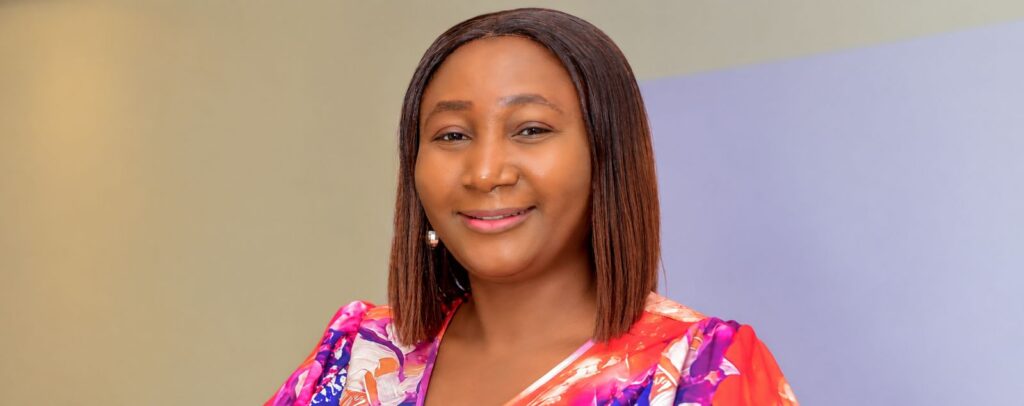
Nendirmwa “Nendi” Ohah has spent the last 11 years working with girls and women across some of the issues that can fundamentally shape their lives — whether they stay in school, whether they are safe, whether they can access support when something goes wrong, and whether the systems around them are equipped to respond.
Her work has taken her from girls’ education and menstrual health to gender-based violence, safeguarding and social inclusion. She has worked directly with adolescent girls and survivors, trained teachers and counsellors, engaged communities and traditional leaders, managed programmes across multiple states and, increasingly, found herself working with the institutions and policies that shape the environments those girls live in.
Looking across her career, what stands out is not just the range of issues she has worked on. It is the way one seems to lead naturally into another.
You cannot talk about keeping a girl in school without talking about menstrual health. You cannot talk about her safety without talking about GBV, safeguarding and the systems available when she needs help. And once you begin looking at those systems, the work inevitably moves beyond the girl herself to the people, institutions and policies around her.
That is where Nendi’s story becomes particularly interesting.
She has spent years doing the practical work of development, building programmes, creating safe spaces, training people, supporting beneficiaries and working with communities. But over time, her work has moved further upstream, towards the structures that determine whether those interventions can actually last.
It is a progression that becomes visible when you look closely at the 11 years she has spent in the sector.
Nendi studied General and Applied Psychology at the University of Jos before going on to complete a Master’s degree in International Development at Ahmadu Bello University. She has also built specialised training in areas including gender-responsive budgeting, safeguarding, prevention of sexual exploitation and abuse, monitoring and evaluation, gender-sensitive governance and project management.
Her early professional experience brought her into work with vulnerable populations, education and community development. But adolescent girls would increasingly become a consistent focus.
As a Programme Officer on ENGINE II, an adolescent girls’ education programme funded by DFID/FCDO and led by Mercy Corps, she worked on a programme that engaged 18,000 girls across Lagos, Kano, Kaduna and the FCT.
At Tabitha Cumi Foundation, her work moved further into the practical realities that determine whether girls can actually benefit from education. She worked on programmes combining teaching and learning with life skills, menstrual health, child protection and GBV prevention, including an intervention that reached 2,000 marginalised girls and young women.
This is one of the things that becomes clearer the longer you look at Nendi’s work: she has rarely treated these issues as separate.
A girl may be enrolled in school and still struggle to remain there. She may have access to education but not the menstrual products she needs. She may experience violence and have nowhere safe to report it. She may have somewhere to report it but encounter a system that is not prepared to respond.
The work, therefore, keeps expanding.
Her work on menstrual health is a good example.
Through the Always Keeping Girls in School programme, funded by Procter & Gamble and CAF America, Nendi supervised interventions aimed at improving girls’ attendance and retention while strengthening menstrual health and hygiene management. The programme included training counsellors and peer mentors, improving sanitary and reusable pad provision, and developing a girl-friendly Braille menstrual hygiene manual for girls with disabilities.
The work also extended to students in schools for the deaf, blind and other special-needs settings.
There is something significant about that detail. It is easy to speak about inclusion as an idea. The harder work is figuring out what inclusion looks like when the standard intervention does not quite fit the person in front of you.
For Nendi, that has meant adapting materials, training the people supporting girls and paying attention to the needs of girls who might otherwise be left out of mainstream interventions.
Then came a deeper engagement with protection and gender-based violence.
Through the FLAGS, Flashlight Actions on Girls’ Safety, programme, funded by the UN Trust Fund, she worked across the FCT, Nasarawa and Niger on the prevention and response to GBV among marginalised adolescent girls. The programme established 30 safe spaces for 750 girls and included prevention, referral, psychosocial support and virtual case management.
During the COVID-19 period, the virtual case management hub managed 117 cases. The work also involved strengthening the capacity of health workers and other actors within the referral system.
And this is where the limits of programme work begin to show themselves.
A safe space can give a girl somewhere to speak. A trained counsellor can help her navigate what happens next. A referral pathway can connect her to services.
But what happens when the problem reaches the institutions responsible for justice and protection?
That question has increasingly appeared in Nendi’s work.
In 2024, while discussing the difficulties survivors face in accessing justice, she called for mobile courts to improve the prosecution of GBV cases. Her work had moved from helping create mechanisms of support to asking harder questions about the systems that survivors ultimately have to navigate.
That movement from direct intervention to systems thinking is also visible in her advocacy work.
One of the achievements listed in her professional record is her role in high-level advocacy with government officials and traditional leaders that contributed to the national adoption of a Programme Code of Conduct by the National Commission for Mass Literacy, Adult and Non-Formal Education across all 36 states and the FCT. The objective was to strengthen protection for women and girls within non-formal education frameworks and schools.
That is a very different kind of intervention from establishing a safe space.
It is about changing the environment in which the work happens.
And perhaps that is the clearest way to understand where Nendi’s career has taken her.
She is still working with girls. But she is also increasingly working with the people and structures around them.
Today, as Programme Manager for the Girls’ Rights, Education and Protection project at Tabitha Cumi Foundation, she is working across Bauchi, Benue, the FCT and Lagos on a Ford Foundation-funded programme focused on safeguarding, adolescent girls’ empowerment, community engagement and protection.
The work includes engaging community leaders, parents and school management on safeguarding guidelines and codes of conduct, creating safe spaces for adolescent girls, training lay counsellors and working with male allies and local leaders around traditional rites of passage.
Again, the girl remains at the centre.
But the intervention is no longer only about what can be done directly for her. It is also about what needs to change around her.
That distinction is important when looking at a career like Nendi’s because development work can easily become a collection of projects. One project reaches 750 girls. Another trains counsellors. Another develops a manual. Another engages government.
But when you put Nendi’s work together, there is a thread running through it.
She keeps moving closer to the conditions that determine whether the intervention will work in the first place.
Her experience managing multidisciplinary teams across 15 states, working with government and community stakeholders, developing safeguarding and policy tools, and securing more than $1 million in competitive grant funding reflects that widening responsibility.
There is also a breadth to her experience that is easy to miss when everything is reduced to job titles. Her work has included programme management, stakeholder engagement, child safeguarding, social inclusion, psychosocial support, advocacy, policy development, monitoring and evaluation, research and resource mobilisation.
She has also taken that work into wider global conversations, including participation in the 67th United Nations Commission on the Status of Women in New York in 2023.
But perhaps the most useful way to read Nendi’s career is not as a list of programmes at all.
It is as a widening circle.
It begins with the girl.
Then it takes in the classroom. The counsellor. The family. The community. The traditional leader. The government official. The policy.
Each layer affects what happens to the girl at the centre.
And that may be what 11 years in this work has changed for Nendi. The question is no longer simply whether a programme has reached its beneficiaries. It is also whether the environment around those beneficiaries is changing.
The numbers still matter: 472 safe spaces, more than 500 survivors supported, thousands of girls reached through education and protection programmes, teams managed across multiple states and more than $1 million mobilised in competitive funding.
But the numbers do not quite tell the story.
The story is in the direction of the work.
From education to protection. From menstrual health to inclusion. From supporting girls directly to engaging the systems around them.
Nendi’s career has increasingly moved from asking how to reach girls to asking a more difficult question: what needs to change around them for that support to truly make a difference?
That is a much bigger piece of work.
And, looking at where her career is now, it is the work she seems increasingly prepared to take on.

More Stories
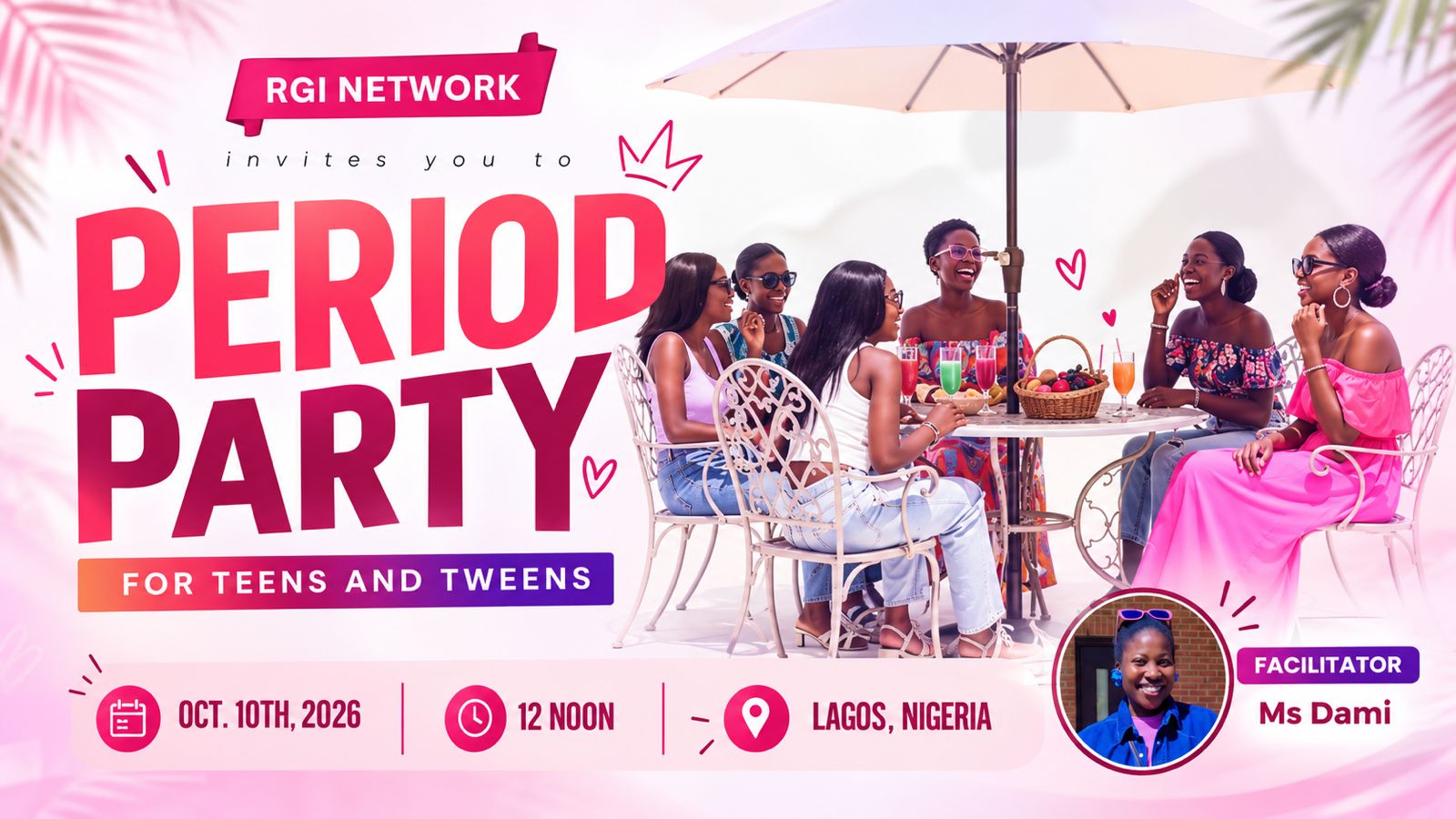
RGI to Host Period Party for Teens and Tweens in Lagos
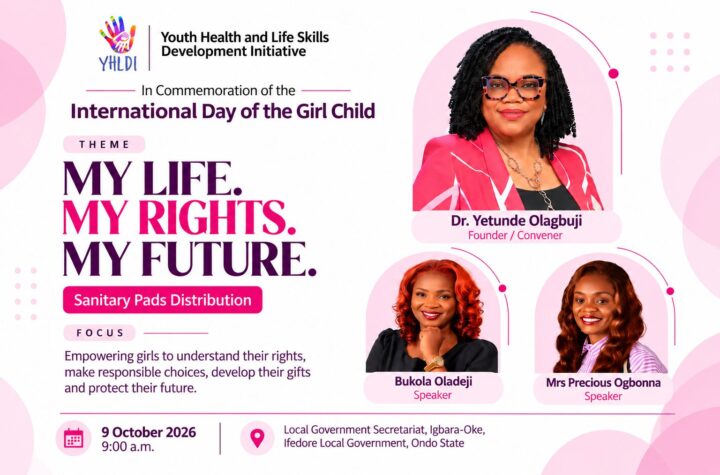
YHLDI to Mark International Day of the Girl Child With Girls’ Empowerment Event in Ondo
Beyond Enrolment: MAYEIN Calls for Action on the Barriers Keeping Oyo Girls in School