

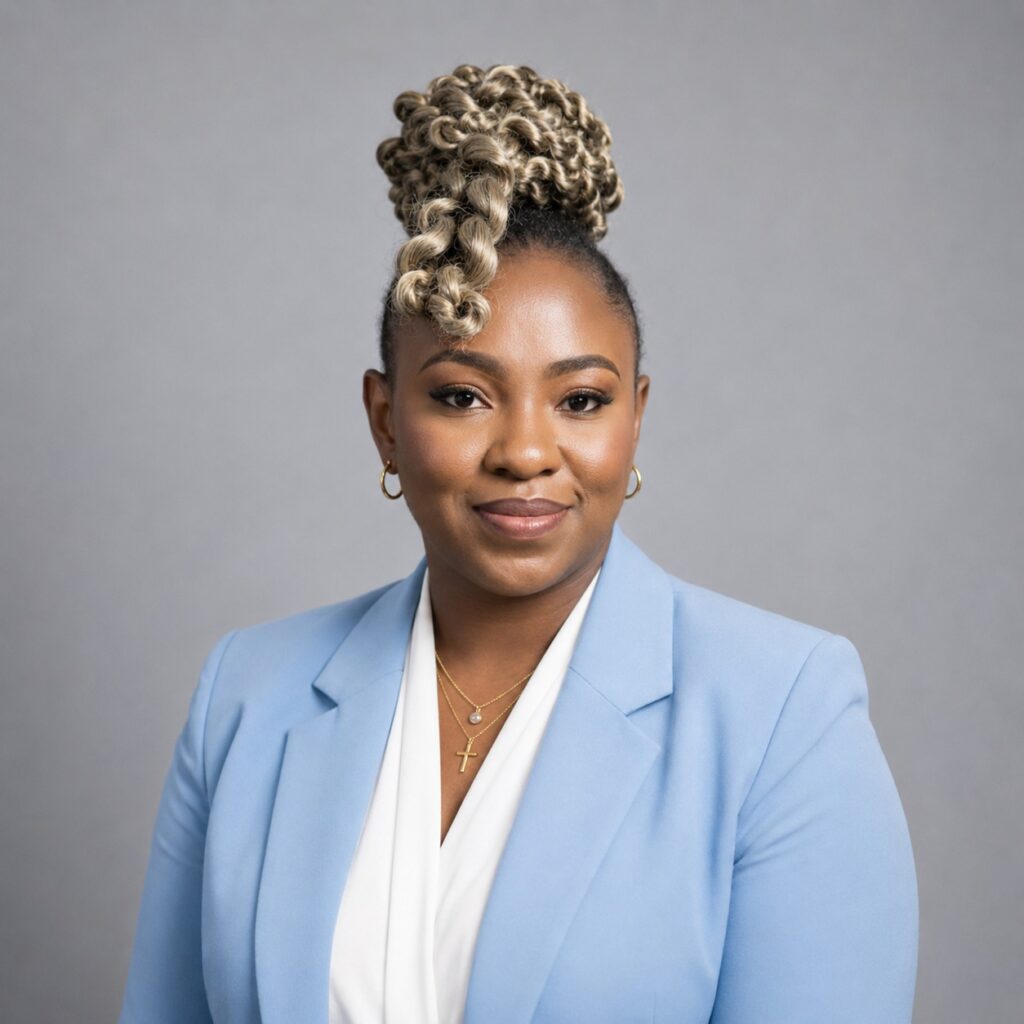
For years, Chiagoziem Adindu has been interested in one thing: people, how they learn, how they grow, how they navigate work and life, and what they need to thrive.
But the more she worked with individuals and communities, the more she began to notice something important: sometimes, developing the person is not enough.
You can equip a young person and send them into a toxic workplace. You can train a domestic worker and return them to a dysfunctional home. You can have a passionate nonprofit founder doing meaningful work inside an organisation that lacks the structures to sustain it.
That realisation has shaped the evolution of Adindu’s work, from education and workforce development to nonprofit leadership, governance and institutional development. Today, she is increasingly focused on a question that many in Africa’s social-impact sector cannot afford to ignore: How do we build organisations strong enough to sustain the good work they were created to do?
In this conversation with The Impact Journal, Adindu reflects on the journey that brought her here, the hidden burdens nonprofit founders carry, why good intentions are not enough to build effective institutions, and why she believes Africa’s social-impact organisations must be locally rooted, financially sustainable and capable of outliving their founders.
Her vision is bigger than building successful programmes. It is about building strong African institutions: institutions with memory, systems, leadership and the capacity to keep changing lives long after their founders step aside.
TIJ: Looking through your career, we see a journey that has moved across law, education, workforce development, nonprofit leadership and now organizational development. When you look at all these different chapters, what do you think has been the thread connecting them all?
CA: The thread has always been people.
Even as a child, I was big on what I now call information philanthropy and advocacy. If I knew something that could help someone else, it was important to me that they knew it too. My decision to become a lawyer was influenced by that. Once I started understanding how the law worked, I wanted other people to understand their rights, know the law and be able to advocate for themselves and navigate the legal system more confidently.
What has changed over the years is the scale at which I understand the problem.
My earlier passions focused heavily on the individual. When we started Educated Citizens International Organization, ETCIO, some of our biggest questions were: How do we help young people develop the right values? How do we prepare them for the workplace? How do we develop confidence, social skills, emotional intelligence and leadership?
Over time, the work forced me to look beyond the individual.
You can equip a young person beautifully and send them into a toxic workplace. You can train a domestic worker and send her into a dysfunctional home. You can have an incredibly passionate nonprofit founder doing meaningful work within an organization that has no structures to sustain that work.
At that point, developing the individual is no longer enough.
So the question expanded from, “How do we develop people?” to, “What kinds of systems, organizations and institutions do people need in order to thrive?”
That has been the progression of my work: people, and then the systems around people. Law, education, workforce development, nonprofit leadership and organizational development are different expressions of that same commitment.
TIJ: You started ETCIO from your living room with just five participants. Take us back to that moment. What was going on in your mind when you decided, “Okay, I’m actually going to do this”?
CA: There was a lot of doubt.
The idea for ETCIO came about two years before I did anything with it. In 2017, I attended the Venture Management Program at Lagos Business School through Junior Achievement Nigeria. We had to make TED-style presentations, and I spoke about values-based education and some of the gaps I saw in the way we were educating young people.
Naturally, I ended my presentation with recommendations about what government should do and what schools should do. [Laughs.]
One of the facilitators listened and asked me a very simple question: “You’ve identified this problem. What are you going to do about it?”
That question stayed with me.
But I didn’t immediately go home and start an organization. For almost two years, I wrestled with all the questions that come with starting something new: Who am I to do this? Where will the money come from? Who will listen? Do I know enough?
Eventually, I reached the point where I had to either continue thinking about it or start with what I had.
And what I had was my living room.
I printed flyers, rearranged my living room into a small training space, provided breakfast and invited people to a five-day personal development and values program.
Five people came.
I was incredibly intentional about those five people. I would drop my son off at school, come home and prepare for the sessions. We talked about personal values, used simulations and role plays, and even learned through handmade artwork.
What surprised me was how much I learned too. I went into that first program believing I knew a great deal about personal values, and I came out deeply grateful for what the participants had shared about their own values, experiences and struggles.
That experience taught me something that still shapes how we design programs at ETCIO: people learn differently when they are part of the learning process. We rarely rely on lecture-style teaching. We create room for participants to bring their own experiences into the conversation through simulations, role plays, reflection and discussion. The learning is richer when people are not simply receiving information but participating in making meaning of it.
That first experience also shaped the way I have built ever since. Many of our programs have started as small, passionate conversations—a phone call, an informal meeting, an observation about something that isn’t working. Then the idea finds its way into the right room, we build collaborations and partnerships around it, and that small conversation becomes a much larger intervention.
ETCIO taught me very early that you don’t need everything to begin. You need clarity about the problem, conviction about why it matters and the willingness to start with what is in your hands.
TIJ: Your work has put you in rooms with very different people, children, young people, professionals, domestic workers, employers and nonprofit leaders. How has working with such different groups changed the way you understand people and what they need?
CA: It has made me much slower to judge people and more curious about what is really going on.
When you work across different social and economic groups, you discover very quickly that human beings are just human beings. I call it the commonality of our humanity. We are more alike than we are different. We bleed the same. We are amused by many of the same things. We want dignity, respect and opportunities. We want to be heard and to feel like we matter.
The circumstances may be very different, but those fundamental human needs are remarkably consistent.
It has also taught me the importance of context. Sometimes what looks like an attitude problem is actually a communication problem. What looks like laziness may be a training problem. What looks like an employee problem may actually be a management problem. And sometimes what looks like a management problem goes even further up into governance or policy.
So instead of beginning with, “What is wrong with this person?” I have learned to ask, “What is happening around this person?”
Another principle that has become fundamental to the way I approach social impact is “Nothing about us without us.”
The people we design programs for are not empty vessels waiting for experts to arrive and tell them what they need. They understand their lives and their communities in ways that we do not.
Our responsibility is to listen.
That doesn’t mean expertise has no place. It means expertise has to meet lived experience.
Some of our strongest interventions at ETCIO have evolved because participants told us, directly or indirectly, “This is what we actually need.” That feedback changes program design, priorities and, sometimes, the intervention itself.
Good social-impact work is not something we simply do to people or even for people. Wherever possible, it is something we build with them.
TIJ: I found your work around domestic employment particularly interesting. You started with domestic workers, but eventually realized that employers also needed to be part of the conversation. What did that experience teach you?
CA: First, ETCIO is not a staffing or domestic-worker placement agency. Educated Citizens International Organization works broadly at the intersection of quality education and decent work, particularly through social skills, values education, personal development and the transition from learning into work.
Our domestic-employment work emerged when we encountered people entering the workforce without ever having had the kind of structured preparation our classroom-to-career model assumed.
Domestic work became one of the clearest examples.
Employers wanted professional domestic workers, but many of the people entering these roles had never received professional training. There was an enormous gap between the employer’s expectations and the worker’s preparation.
So we initially concentrated heavily on the workers: professionalism, communication, financial literacy, etiquette, values, boundaries and other skills.
Then the obvious question emerged: what happens when we train this person and send them straight back into an environment that hasn’t changed?
You can teach a domestic worker about boundaries, but does the employer understand boundaries? You can teach effective communication, but does the employer know how to communicate appropriately? You can teach professionalism and dignity, but is the workplace itself structured in a way that respects either?
That was when it became clear that we could not continue having a one-sided conversation.
We expanded the work to employers because sustainable change requires looking at the relationship and the system, not simply identifying the person with less power and deciding that they are the one who needs fixing.
And even that is not enough.
Domestic work remains highly informal and inadequately regulated in many contexts. Training workers and educating employers can improve individual relationships, but voluntary behavioral change has limits. Sustainable change also requires conversations about standards, protections, policy, regulation and, importantly, enforcement.
That experience changed how I approach social problems. You can begin with the individual, but if you follow the problem far enough, eventually you encounter systems, leadership, governance and policy.
TIJ: At what point did you begin to see yourself not just as someone running programmes, but as someone interested in building systems and institutions?
CA: That shift happened gradually through the work.
The more programs we ran, the more I saw the difference between impact and sustainability.
You can run an extraordinary program. The participants love it, the testimonials and photographs are beautiful, and you have evidence that people’s lives were affected.
And then what?
What happens when the funding ends? What happens when the person who knows how everything works leaves? What happens when the founder gets tired? What happens when an organization grows beyond the founder’s personal capacity to manage it?
Those questions became increasingly important to me.
I started paying more attention to what happens around a good program: the governance, funding, people, processes, leadership, documentation, institutional knowledge and organizational culture required to sustain it.
That also changed how I understood impact.
Running a successful program is one form of impact. Building an organization capable of delivering that program consistently, learning from it, improving it, financing it and eventually continuing it without depending on one individual is another level entirely.
That is where institutions matter.
An institution has memory beyond one person. It has structures, leadership, accountability and repeatable processes. It has the capacity to survive transitions.
So my interest moved beyond asking, “How do we run better programs?” to asking, “How do we build organizations strong enough to sustain good work?”
That question now sits at the center of much of my work around law, governance, organizational development and nonprofit sustainability.
TIJ: You are a lawyer, but much of your career has taken you outside traditional legal practice. How has studying and practising law shaped the way you approach governance, leadership and social impact?
CA: Law affects the way I approach almost everything.
I began my legal career in the Ministry of Justice, which was an excellent place to see law from the perspective of the state—how laws, institutions and public authority actually operate.
From there, I moved into corporate and in-house legal work and worked as a chartered company secretary, with a strong focus on corporate and board governance. At the same time, I consulted with small and medium-sized businesses on restructuring, compliance and related legal issues.
That work exposed something that stayed with me: many people are building organizations without fully understanding the legal and governance implications of how those organizations are structured.
That was where my interest in organizational compliance became particularly strong, not compliance merely as paperwork, but understanding the legal, regulatory, sectoral and policy frameworks within which an organization operates.
Legal training also teaches you to interrogate structure.
Who has authority here? Where does that authority come from? Who is accountable to whom? Who has the power to make this decision? What happens when something goes wrong? What obligations do the parties owe one another? What mechanisms exist to prevent abuse?
Those may look like legal questions, but they are also governance questions.
And that becomes particularly important in social impact because good intentions are not a governance system.
The nonprofit sector is filled with extraordinary people who genuinely care about their communities. But passion does not eliminate the need for accountability. A noble mission does not eliminate conflicts of interest. Being a good person does not automatically make someone a good fiduciary.
Organizations still need clear structures, functioning boards, policies, internal controls, accountability and compliance.
That intersection, law, governance, structure and institutional effectiveness, is where my work naturally sits. Even when my work takes me beyond traditional legal practice, the lawyer in me is very much present. I am always looking at the architecture underneath the work.
TIJ: Let’s talk about nonprofits. What do you think many nonprofit founders are carrying that they shouldn’t have to carry alone?
CA: Everything. [Laughs.]
And I say that with a lot of empathy because I know what it is like to build something from an idea.
Most nonprofit founders don’t begin by saying, “I am going to build an institution.”
They see a problem that bothers them enough that they decide somebody has to do something.
So they start.
Then the organization grows around them.
Before long, the founder is the visionary, fundraiser, program manager, HR person, spokesperson, partnership manager, chief problem solver and keeper of the institutional memory. Sometimes they are also the only person who knows where every document is and remembers every password.
Eventually, the organization starts living inside the founder’s head.
That is exhausting for the founder, but it is also a serious institutional risk.
If one person’s absence can destabilize the organization, you don’t simply have a workload problem; you have an organizational-design problem.
But I am also careful about the way we talk about founders “letting go.”
Let go to what? Let go to whom?
You cannot ask a founder who has spent ten years carrying an organization to suddenly hand responsibility over to structures that either don’t exist or haven’t earned their trust.
The real work is helping founders build something they can safely let go into.
That means a board that actually governs rather than simply lending names to letterhead. It means capable leadership and staff, clear delegation, financial controls, documented processes, succession planning, institutional memory and a funding model that doesn’t depend entirely on the founder’s personal relationships.
The goal is not to make the founder irrelevant. The goal is to make the organization institutionally capable.
The moment the mission can continue without everything passing through one person, you are beginning to build something that can outlive its founder.
TIJ: You are quite vocal about sustainability and the relationship between money and social impact. Why do you think the nonprofit sector still finds it difficult to have honest conversations about money?
CA: Somewhere along the line, we began treating sacrifice as evidence of impact.
There is an expectation, particularly in the social-impact space, that because the work is mission-driven, the people doing it should somehow need less money, organizations should operate on almost nothing, and conversations about revenue or financial sustainability should make us uncomfortable.
That is simply not sustainable. The fact that an organization exists to solve a social problem does not make its bills disappear.
If you want excellent people, you have to pay them. If you want strong programs, they have to be funded. Technology, compliance, research, monitoring and evaluation, communications and even fundraising cost money.
When we chronically underfund the organization while funding the program, eventually the organization becomes too weak to deliver the very impact we are paying for.
We also need to understand what “nonprofit” actually means. It does not mean “no revenue,” and it certainly does not mean “remain poor.” The distinction is what happens to the organization’s resources: they exist to advance the mission rather than to be distributed to private owners as profit.
The sector needs a more mature conversation about money.
There is no virtue in an organization being permanently one grant away from collapse. There is no gain in burning out talented employees in the name of service. And there is no value in a founder personally subsidizing an organization indefinitely because nobody wants to discuss a sustainable business model.
Financial sustainability is not separate from mission. It is part of protecting the mission.
TIJ: You have said something very striking: “There is nothing wrong with Africa.” What do you mean when you say that, especially when you are also very aware of the continent’s challenges?
CA: When I say there is nothing wrong with Africa, I am not saying Africa has no problems.
We have serious challenges with governance, poverty, corruption, inequality, weak institutions and many other issues that require honest confrontation.
What I reject is the conclusion that there is something inherently wrong with us.
There is a way Africa is sometimes discussed, as though our challenges are proof that African people, African cultures or African ways of being are fundamentally defective. And sometimes we internalize that narrative ourselves.
Living outside Africa has made me even more conscious of it.
There are things other societies do extraordinarily well, and we should learn from them. I am a strong believer in learning across jurisdictions, disciplines and cultures.
But learning is different from imitation, and Westernization is not the same thing as modernization.
A system is not modern simply because it looks American or European. The real questions are: Does it work? Does it solve the problem? Is it appropriate for the people it is meant to serve? Can it function within the cultural, economic and institutional environment in which it has been placed?
We sometimes import models without interrogating the assumptions underneath them. Then when those models don’t produce the same outcomes, we conclude that Africa is the problem.
No. Context matters.
Our task is to identify what is excellent in global practice, understand why it works and determine how it can be intelligently adapted to African realities. At the same time, we need to identify, study and strengthen the solutions already emerging from Africa.
We can fix what is broken without despising ourselves. We can modernize without erasing ourselves. We can build globally respected institutions that remain authentically African.
That is the Africa I am committed to helping build.
TIJ: Finally, Chiagoziem, when you look at the next chapter of your work, particularly your plans to support nonprofits and social-impact organizations across Africa, what are you really hoping to build? And what would make you look back years from now and say, “I did what I came here to do”?
CA: The next chapter of my work is focused on strengthening African nonprofits and social-impact institutions.
I want to see organizations that are not completely dependent on one founder, organizations with boards that actually govern, strong teams, sustainable funding, healthy cultures and the capacity to continue doing meaningful work beyond the people who started them.
A major part of that vision is developing more African-centered approaches to institutional development. There are excellent international practices we should learn from, but we cannot simply transplant frameworks from other jurisdictions and expect them to work the same way in Lagos, Nairobi, Accra or Kigali. We have to understand the principles, understand our context and build accordingly.
I also want Africa to be a producer of knowledge in this space. We need more research about African nonprofits, governance frameworks informed by our institutions, and approaches to philanthropy and fundraising that reflect how Africans actually give. We should be documenting what works here and contributing that knowledge to the global social-impact sector.
So I see this work going beyond consulting into research, training, board and governance development, institutional strategy, and practical frameworks that organizations can use.
Ultimately, the vision is for African institutions that are locally rooted and globally respected, well governed, financially sustainable and confident about who they are.
And success for me will be measured by what became stronger because of the work: founders who no longer have to carry entire organizations alone, boards that truly govern, institutions that survive leadership transitions, and research or frameworks that influence how the sector works.
Because if we strengthen the institutions already educating children, creating opportunities, advancing health and solving some of Africa’s most difficult problems, then the impact goes far beyond anything I could accomplish personally.
That is what I came here to do: help build strong African institutions that can outlive their founders, sustain their missions and keep changing lives for generations.


More Stories
From Lagos to Canada: Ibironke Odumosu-Ayanu Takes the Helm of a Canadian Law School
HOW OLAYINKA MORDI IS REIMAGINING THE SPACES WE LIVE IN
HOW CHINEMEREM BLESSING WEALTH MADE EMPOWERING WOMEN HER LIFE’S WORK