
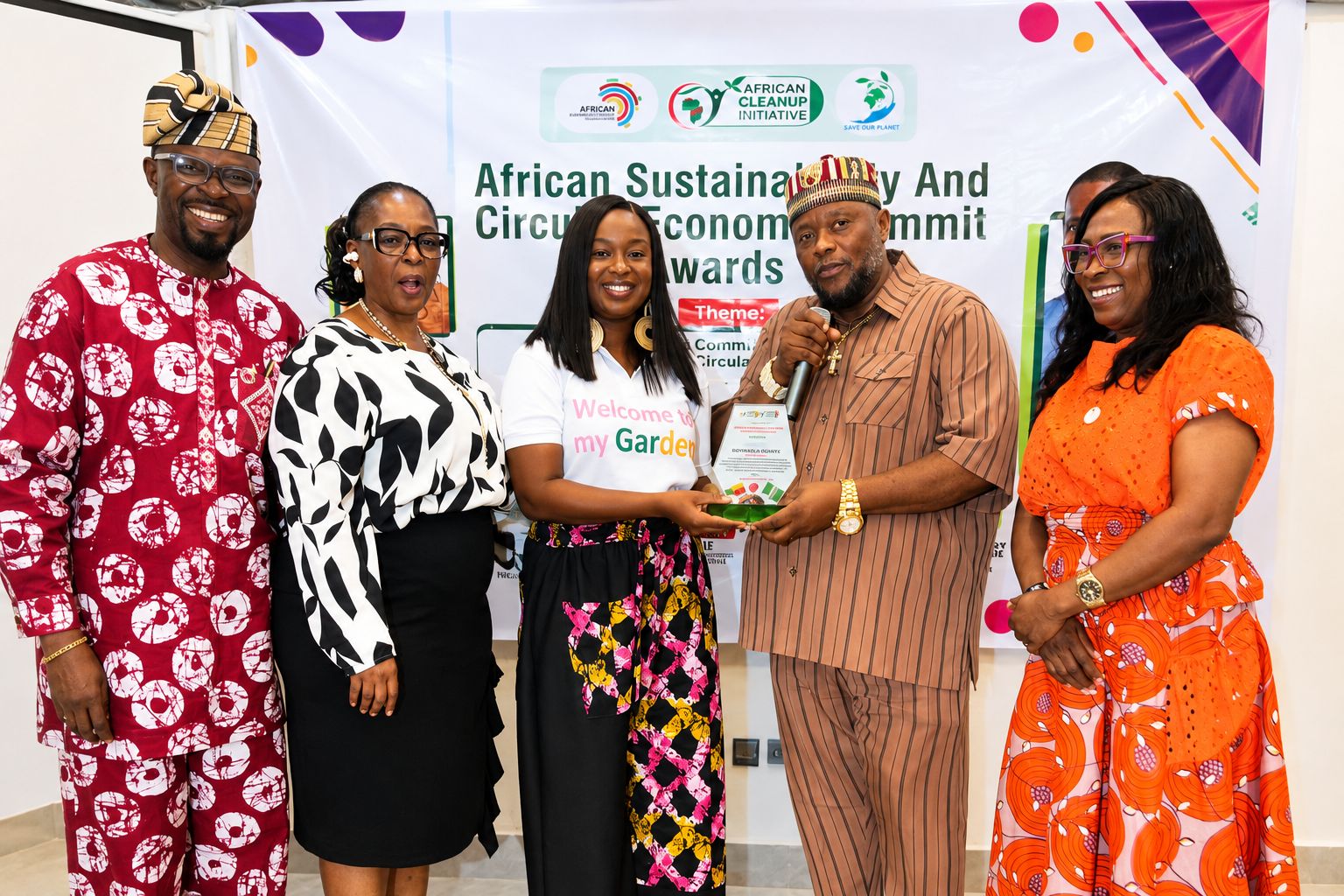
Nigerian conservationist and sustainability expert, Doyinsola Ogunye, has been honoured with the African Sustainability and Circular Economy Impact Award for her contributions to environmental protection, sustainable development and the advancement of circular economy practices across Africa.
Ogunye received the recognition at the African Sustainability and Circular Economy Summit and Awards 2026, held in Cotonou, Republic of Benin, alongside other Nigerian sustainability leaders and practitioners.
The awards, presented by the African CleanUp Initiative (ACI Nigeria), recognised individuals whose work is contributing to environmental protection, climate action, sustainable development and the transition towards more circular and resilient communities.
Among the other Nigerian recipients were Titilayo Oshodi, Special Adviser on Climate Change and Circular Economy to the Lagos State Government; Rashidah Omotola AbdulQuadri, Project Director, ATO Climate Educate; and Engr. Onyinye Akubuilo-Okpalanma, Special Adviser to the Governor of Enugu State on Sustainable Development Goals.
For Ogunye, the recognition reflects more than 16 years of work at the intersection of environmental protection, conservation and community development. Her work has spanned coastal conservation, recycling, waste-to-wealth initiatives, environmental education, habitat restoration, tree planting and community empowerment.
A defining feature of her work has been the deliberate inclusion of women, young people and local communities in environmental action—creating opportunities for them not only to participate in sustainability initiatives but also to benefit from emerging opportunities within the circular economy.
Speaking after receiving the award, Ogunye described the recognition as both a personal honour and a reflection of the collective efforts of the people and communities behind the work.
“I am deeply honoured to receive this recognition alongside some of the remarkable leaders and changemakers working in the sustainability space. This award is a reminder that the work we do for our environment matters and that collective action can create lasting change,” she said.
She expressed appreciation to the organisers, as well as the partners, volunteers, communities and organisations that have supported the initiatives she leads.
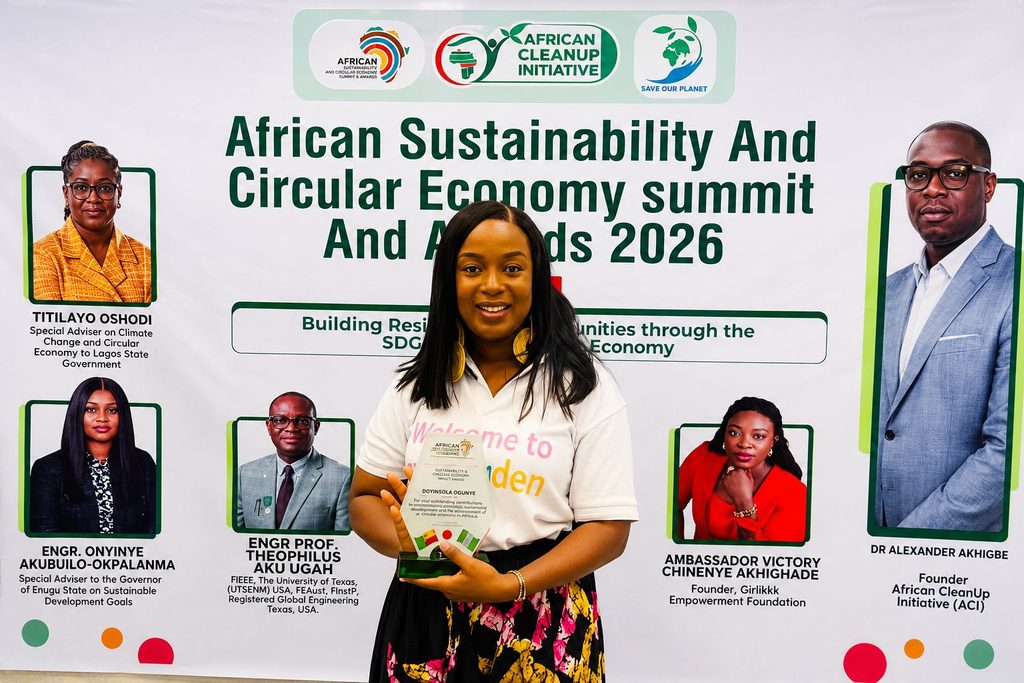
Ogunye also celebrated her fellow award recipients and the growing community of African environmental leaders working to develop locally relevant responses to the continent’s sustainability challenges.
The Cotonou summit brought together sustainability leaders, policymakers, innovators, development practitioners and other stakeholders to exchange ideas, strengthen collaboration and spotlight approaches capable of advancing Africa’s environmental future.
The recognition comes at a time when circular economy approaches are receiving increasing attention across Africa as countries seek to address environmental challenges while creating new economic and livelihood opportunities. The African Development Bank, for instance, has identified circular economy development as an important pathway for addressing environmental and economic challenges while supporting climate action, green growth and job creation.
For Ogunye, sustainability remains inseparable from community development and economic empowerment.
She reaffirmed her commitment to advancing environmental protection while building stronger opportunities for communities to participate in and benefit from Africa’s emerging green and circular economy.
She also commended the team behind the Cotonou summit, led by Dr Alexander Akhigbe, for creating a platform that recognises and amplifies African-led solutions to environmental and sustainability challenges.
The recognition of Ogunye and other Nigerian sustainability leaders at the continental gathering further highlights the growing role of African practitioners in shaping the continent’s response to climate change, environmental degradation and the transition towards more sustainable economies.




More Stories
AI LIVE London Summit Adds Global Technology Leaders to 2026 Speaker Line-Up
RGI to Host Period Party for Teens and Tweens in Lagos
YHLDI to Mark International Day of the Girl Child With Girls’ Empowerment Event in Ondo