
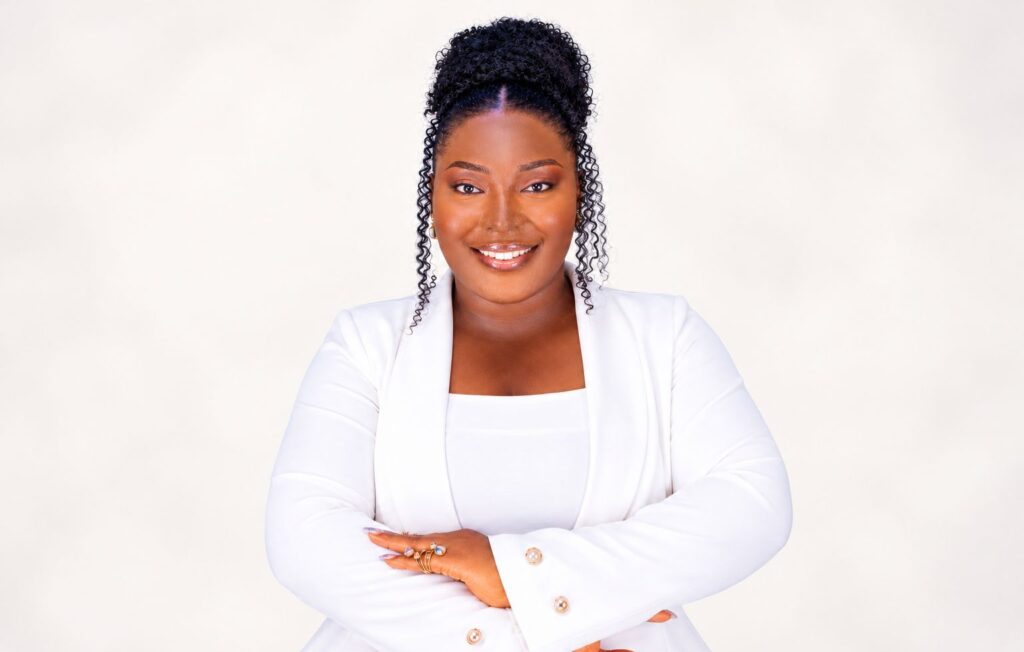
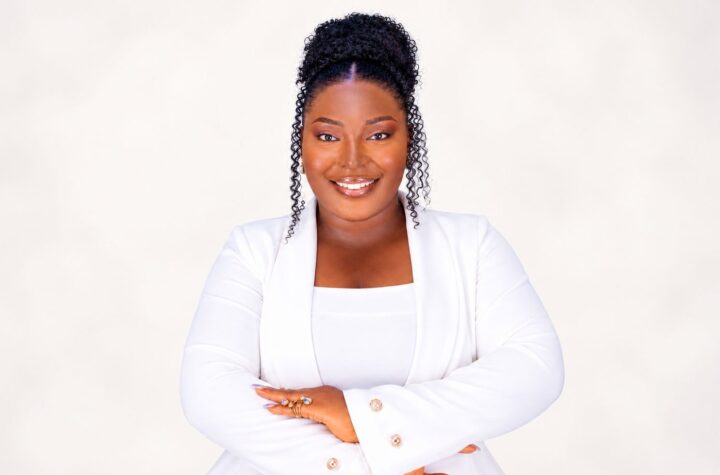
Ayomiposi Ogundipe is a Nigerian development professional and programme manager working across girls’ development, gender equality, women’s economic empowerment, and youth engagement. She has worked on programmes supported by organisations including UNICEF, UN Women, and the Ford Foundation. She is also the founder of Ablefort Initiative, an organisation working to improve opportunities for underserved children, adolescents, and women.
Today, she works with communities, coordinates programmes, supervises facilitators, and contributes to initiatives addressing some of the challenges facing girls and women. But before the programmes, partnerships, and responsibilities, there was a young woman who simply wanted to get involved and see how she could make a difference.
Her journey into social impact began in November 2017, when she was in her second year at university. She would go on to spend years volunteering with underserved children and adolescents, work on menstrual health advocacy, and eventually establish an organisation of her own.
But getting here was not simply a matter of deciding what she wanted to do and watching everything fall into place.
After her NYSC camp in Plateau State, Ayomiposi returned to Abuja to look for a place for her primary assignment. Finding one was not easy. She spent about a month waiting on different promises before eventually finding an NGO through Instagram.
What caught my attention was that she already had an idea of the kind of work she wanted to do. She was looking for an agricultural firm or an NGO. She did not want to simply take a position somewhere she had never imagined herself working.
That search eventually led her into the development sector, but it was the work she did during that period that began to show the direction her life was taking.
During her NYSC year, she commemorated Menstrual Hygiene Day with girls at a school in Abuja. The outreach included teaching them about healthy menstrual practices and donating sanitary pads. It was one of the activities that stood out from her service year, and it would not be the last time she worked on menstrual health.
There were other experiences, too, that brought her closer to the realities children and adolescents face when the support they need is missing.
One involved a girl who had stopped attending school because her family could no longer afford it. Ayomiposi helped her return to school.
Another involved two boys who had been out of school for two years after their father died. Their mother, who was blind, was struggling to support them. Ayomiposi helped raise funds to get the boys back into school and pay for extra lessons.
Two years out of school.
I keep thinking about that. Two years is a long time in a child’s life. While other children are moving through their classes, these boys had been forced to put their education on hold. And even after getting them back into school, they still had the work of catching up.
It also makes me think about their mother. She had lost her husband and was trying to care for her children in circumstances that made providing for them difficult. People sometimes talk about education as though every parent has the same ability to keep their children in school. But what happens when a family wants its children to learn and simply cannot afford it?
That is one of the things that makes this kind of work important. Sometimes, the difference between a child staying in school and dropping out is not a lack of interest in education. It is whether somebody can help when a family runs into difficulties.
Ayomiposi could not take away everything that family was going through. But she could help the boys return to school and get the extra lessons they needed. And she did.
I think experiences like this help us understand why volunteering can become something much bigger than giving up a few hours of your time. When you spend years working with people whose circumstances limit their options, you begin to see how many of those difficulties are connected. You also begin to understand that wanting things to change is not always enough. Sometimes, you have to work out what you can do, who you can work with, and how to make the support last.
For Ayomiposi, one of the issues that would remain part of her work was menstrual health.
She had been involved in menstrual health advocacy from the early years of her volunteering journey. Between 2019 and 2020, she led the Ogun State team for the She Needs a Pad Project, coordinating volunteers for outreach activities that introduced girls and women to menstrual health education and reusable sanitary pads.
Her interest in reusable pads grew as she researched the subject and attended training. She began to see them as a sustainable way to address period poverty, particularly because the materials needed to make them were accessible.
But the more you look at menstrual health, the more you realise that the problem goes beyond access to sanitary pads. Some girls in underserved communities were managing their periods with rags and leather, while others resorted to folding their underwear to absorb menstrual flow.
I find it difficult to think about these realities without wondering what it means for a girl to go through something as natural as menstruation without the basic things she needs to manage it safely and with dignity. And this is why menstrual health education and access to suitable products matter. Girls need more than occasional awareness campaigns; they need support that responds to what they are actually experiencing.
Ayomiposi continued this work through Periods With Pride, a menstrual health education initiative designed to reach adolescent girls with information about menstruation, menstrual products, and menstrual health. Her work and collaborations in this area have extended beyond Nigeria to countries including Kenya, Pakistan, and India.
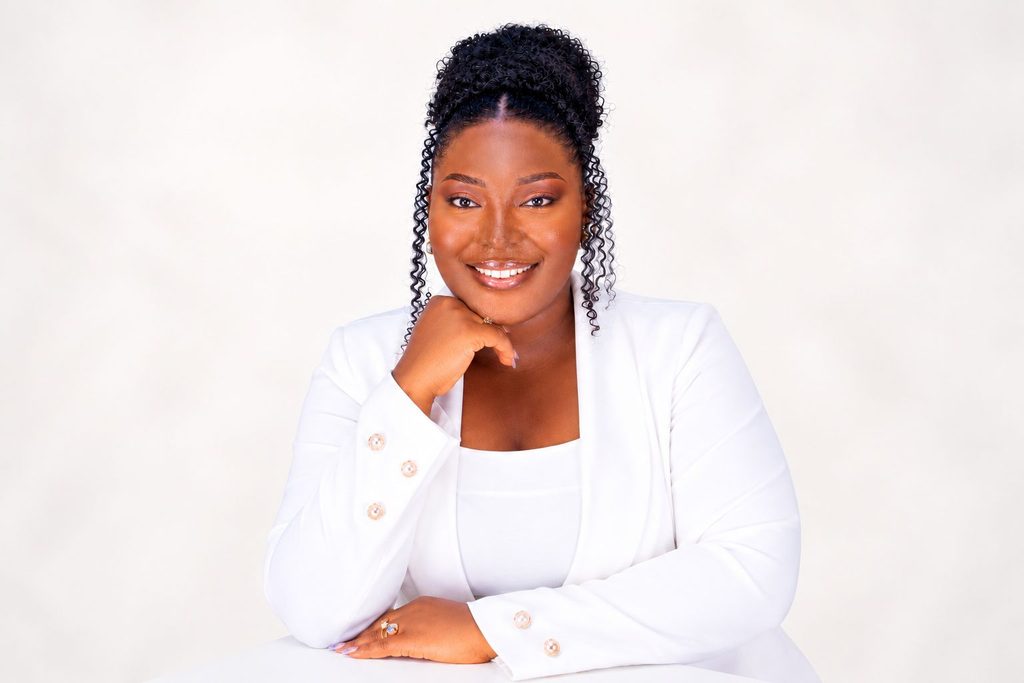
By 2023, after about six years of volunteering with underserved children and adolescents, she established Ablefort Initiative.
By then, she had seen how often young people’s potential was limited by circumstances beyond their control. There were children struggling to stay in school, girls who needed access to menstrual health information and products, and young people who needed opportunities to learn and grow. She wanted to build something that could help bridge some of these gaps and improve access to quality education and opportunities.
I can understand how the experiences she had accumulated over those years would lead to that decision. There is a difference between helping with an activity and building an organisation that can take on a problem over time. The latter requires a different level of planning and responsibility. You have to think about people, resources, partnerships, and what it will take to keep the work going.
And the problems do not become smaller simply because you have registered an organisation.
Ablefort Initiative has gone on to work across issues affecting children, adolescents, and women. Ayomiposi’s professional work has also expanded into programmes focused on preventing harmful practices, strengthening women’s rights organisations, and improving women’s economic opportunities.
One example is her work on the WAGE-H programme and its She Learns initiative, implemented with the Balm in Gilead Foundation. The initiative supported adolescent girls to develop skills and turn what they learned into market-ready products, producing more than 70 items.
Now, I always want to know what happens after a programme ends. We hear about the number of people trained and the skills they acquired, but what happens when everyone goes home? Can they use what they have learned? Does the opportunity continue beyond the life of the project?
In the case of She Learns, follow-up reporting indicated that most of the women were still running income-generating businesses a year after the programme ended. I find that encouraging because it gives us a sense of what happened after the training itself. It is one thing to teach a skill; it is another to help people use it to earn an income and sustain a business.
Ayomiposi’s work with girls has also taken her into communities across Ekiti State through a UNICEF-funded project focused on preventing harmful practices. She supervised facilitators working across several communities to engage girls, boys, and other community members. The scale of the programme is significant, but what matters just as much is the work of helping communities understand and address practices that affect children’s lives.
She has also contributed to a Ford Foundation-funded programme focused on strengthening women’s rights organisations and preventing gender-based violence across Southwest Nigeria. This involved assessing organisations’ needs and supporting conversations around how they could strengthen their work. Through a UN Women-funded programme, she has also supported women’s political participation, serving as officer in charge.
These roles show the different levels at which development work happens. Sometimes, the work is directly with girls and women. At other times, it involves strengthening the organisations and people who are working to improve their circumstances.
Both require patience, coordination, and an understanding of what is happening beyond the programme documents.
Alongside her programme responsibilities, Ayomiposi has also been involved in the Chayil Girls Conference in 2023 and 2024, which reached 183 girls. These kinds of initiatives create opportunities for girls to learn, ask questions, and think about their futures.
But there is another part of Ayomiposi’s journey that I find particularly interesting: she has spent time helping other people learn how to volunteer.
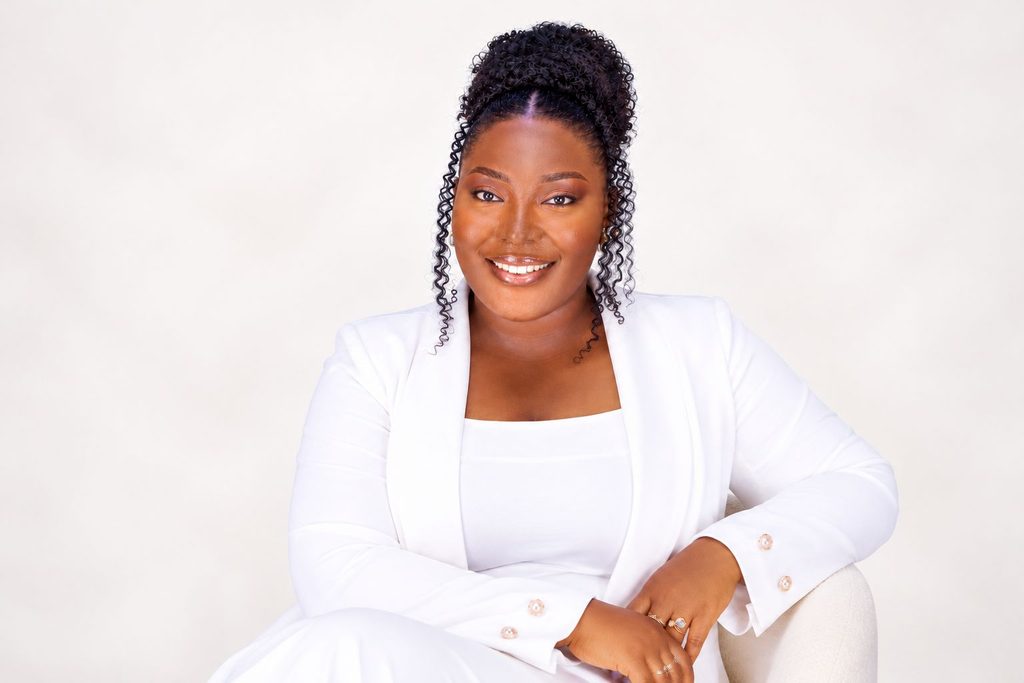
In May 2022, she began sharing her volunteering experiences on LinkedIn. She had spent years volunteering herself, and she started sharing what she had learned with people who wanted to get involved but did not know where to begin. She also created resources and learning opportunities for nonprofit managers who needed help understanding how to work with volunteers.
The response encouraged her to keep going. She went on to train more than 500 aspiring volunteers and over 200 volunteer managers, while building The Volunteer Space community.
I like the fact that she did not keep what she had learned to herself. There are many people who want to volunteer but do not know how to find suitable opportunities or how to make themselves useful to an organisation. Nonprofits, too, sometimes struggle to recruit and manage volunteers effectively.
Volunteering is often spoken about as though good intentions are all that is required. But there is a practical side to it. You need to understand the work, show up when you say you will, respect the people you are working with, and recognise that the organisation and community are not there simply to provide you with an experience.
Ayomiposi had spent years learning through service. Sharing those lessons was another way to help people contribute more effectively.
There was also something else that changed when she began sharing her experiences publicly: people started to see the work she had been doing. She connected with people who shared her interests, received invitations to speak, and found new opportunities to reach people who wanted to learn about volunteering.
This is something I think about quite often. You can spend years doing meaningful work, but if you never tell people about it, how will they know? How will they find you, learn from you, or think of you when an opportunity comes up? Sharing your work is not about pretending to have achieved everything. Sometimes, it is simply about letting people see what you are learning and doing.
But showing up consistently was not always easy for Ayomiposi.
She once planned a series of posts to help nonprofit founders and project managers understand volunteer management. The content was ready, but she kept putting it off because the flyer she wanted to use was not ready.
I smiled at that detail because the flyer had nothing to do with whether she could share the knowledge she had prepared. The content was ready; the presentation was holding it back.
It is a familiar trap. You want to do something well, so you keep adjusting things and waiting for the right moment. Before you know it, the work that could already be helping somebody is still sitting there.
What I appreciate is that she was willing to acknowledge that struggle. She was not presenting herself as someone who had mastered every part of the process. She was learning, too.
And that is part of the story. Building an organisation, managing programmes, and helping other people contribute to social change do not mean you have everything figured out. There are things you learn while doing the work, and there are habits you still have to challenge in yourself.
Ayomiposi also recognised when she needed to take a break, recharge, and think through new ideas. For someone whose work involves encouraging others to get started and keep showing up, I think that is worth acknowledging. Sometimes, moving forward also means recognising when you need to pause.
Her academic journey has developed alongside this work. Ayomiposi studied Agricultural Science, specialising in Animal Nutrition, at the Federal University of Agriculture, Abeokuta, graduating in 2021. She is pursuing a master’s degree in Gender and Development Studies at the Federal University Oye-Ekiti, where her research focuses on gendered power dynamics and institutional actors in digital inclusion among adolescent girls.
It is an interesting area of study given the work she has done with girls and young people. Access to digital technology can create opportunities for learning, participation, and connection, but access is not always equal. Family expectations, affordability, safety concerns, and the decisions of institutions can all influence whether girls can benefit from the opportunities available online.
Her research brings another dimension to the questions that have followed her work: what prevents people from accessing opportunities, and what needs to change so that those opportunities are genuinely available to them?
When I look at Ayomiposi’s journey, I do not see a straight line from volunteering to founding an organisation. I see a young woman who began by getting involved, encountered problems that made her want to do more, and gradually found different ways to respond.
There were children who needed help getting back into school. There were girls who needed information and access to menstrual products. There were women who needed opportunities to turn their skills into income. And there were people who wanted to volunteer but needed guidance on how to begin.
Her work has grown to meet different needs, and along the way she has had to learn how to manage programmes, coordinate people, build partnerships, and work through her own challenges.
There is still a great deal to do in the areas she works in. But what began with volunteering has become a career, an organisation, and a growing body of work aimed at helping girls, women, and young people access better opportunities.
And for me, that is the part of her story worth paying attention to: not just that she has done a lot, but how the work has grown out of the things she encountered, the decisions she made, and her willingness to keep finding ways to contribute.

More Stories
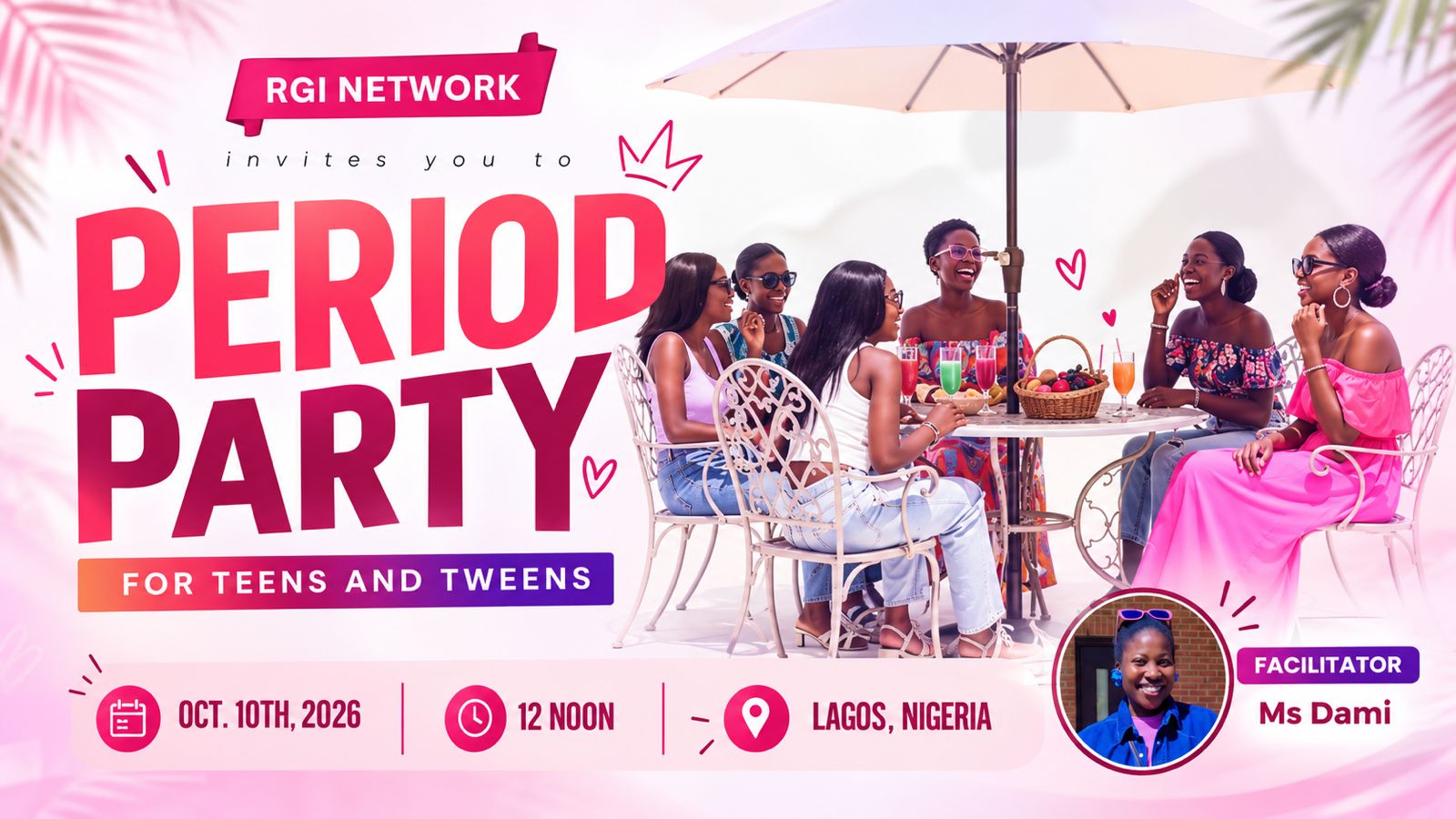
RGI to Host Period Party for Teens and Tweens in Lagos
Beyond Enrolment: MAYEIN Calls for Action on the Barriers Keeping Oyo Girls in School
HOW OWOLABI WILLIAMS IS HELPING BOYS BECOME THE MEN THEY ARE CAPABLE OF BECOMING