
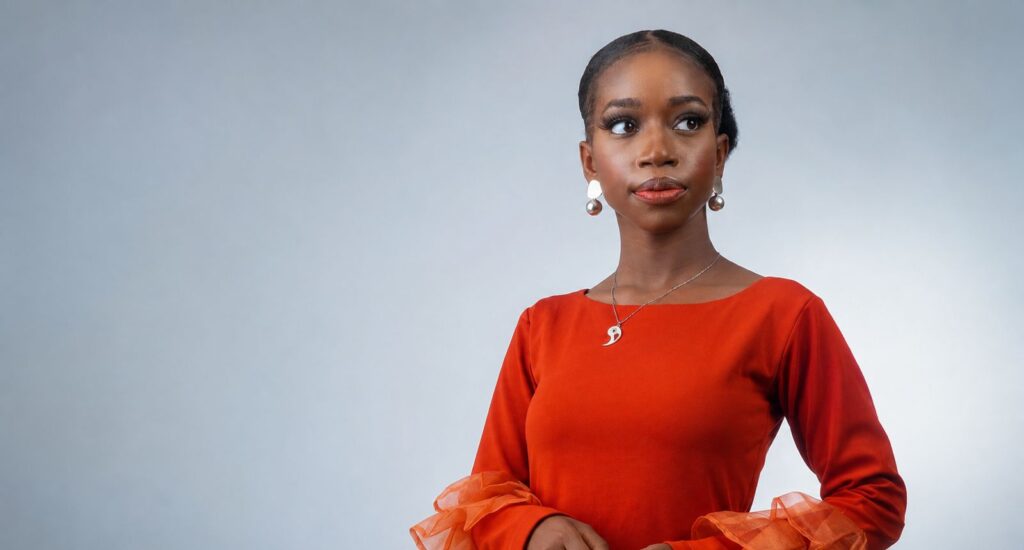
There are people who work in communications because they know how to put words together. Then there are people like Juliet Nwobodo, who seem to have found their way into communications because they are constantly asking what those words are really saying, and what happens after people hear them.
Who gets to tell a story? Whose voice is missing? What happens when people at the centre of an issue are reduced to statistics? And after the campaign has ended, the report has been published and the social media posts have gone live, what, if anything, has actually changed?
Those questions have followed Juliet through a career that has moved across development communications, advocacy, project management, digital storytelling and creative work. She has worked around education, healthcare, climate action, gender and women’s rights, supported donor-funded programmes, led campaigns, developed communication strategies, facilitated conversations and contributed to documentaries and films. But beneath the variety is a remarkably consistent instinct: Juliet wants communication to do more than tell people what is happening. She wants it to help them understand why it matters, whose lives are affected, and where they might fit into the work of changing it.
Perhaps that is why her approach to storytelling is so closely tied to listening.
Juliet has spoken about a childhood memory she says she may never leave out when talking about growing up: witnessing an armed robbery attack as a primary school child and being hidden inside a drum with her sister and other children while the adults tried to keep them safe. It is a frightening memory, but what is striking is the way she has carried it forward, not simply as a story about something that happened to her, but as a lens through which she thinks about children growing up amid insecurity. Behind every statistic about violence, displacement or vulnerable children are actual people whose experiences do not end when the news cycle does.
That instinct to look beyond the statistic and find the person appears repeatedly in Juliet’s work.
While contributing to Silent Echoes of the Classroom, an impact documentary focused on girls’ education in Northern Nigeria, she began thinking more deeply about the way development stories are usually told. The familiar formula is easy to recognise: the statistics, the poverty, the challenge, the intervention and, eventually, the success story. But communities are rarely that neat. Their realities are more complicated, and when outsiders do most of the talking, important parts of the story can disappear.
Juliet chose to listen. She spoke with girls, parents, teachers and community members, and the experience later gave her a deeper appreciation for participatory communication. During a LEAP Africa masterclass on development communications, she encountered the concept and recognised something she had already begun to practise, the idea that people should not simply be subjects of stories about their communities but participants in shaping the narratives told about them.
That distinction matters. A story can be technically accurate and still leave out something essential. The question is not only whether the story is true, but whether the people whose lives it describes recognise themselves in it.
That same attentiveness has shaped the way Juliet thinks about development work more broadly. She has questioned the tendency within the sector to sometimes present activities as impact, or service delivery as advocacy. Giving sanitary products to hundreds of girls, for example, can address an immediate need, but it does not automatically change the policies, systems or economic realities that make those products inaccessible in the first place. The intervention can be valuable while the claim about its impact is still overstated.
For Juliet, the uncomfortable question is therefore worth asking: what actually changed?
It is a question that has made her more interested in the substance behind the communication. She is not only concerned with helping organisations tell their stories better; she is increasingly interested in whether there is enough behind the story to justify the telling.
Her work around family planning offered another lesson in the importance of listening before reaching conclusions. Conversations with women, men and healthcare providers challenged some of the assumptions she had previously held about why women make certain reproductive choices. The more she listened, the more complicated the issue became. People make decisions within the options available to them, and what can look like a simple choice from the outside may be shaped by access, cost, culture, information, previous experiences or the limitations of the systems around them.
It is a lesson that extends well beyond healthcare. In almost every development issue, there is a temptation to arrive with the solution already in hand. But the people living with a problem often possess a kind of knowledge that cannot be captured in a project proposal or theory of change: the knowledge of what it actually feels like to live inside the problem.
For Juliet, listening is not simply a communications technique. It is part of understanding.
Her journey into climate advocacy brought another dimension to that understanding. Although her interest in climate began much earlier, it became more personal when she saw friends affected by flooding in Nigeria. Climate change stopped being an abstract global issue and became something happening around people she knew. That experience drew her further into climate justice conversations, particularly around the disproportionate effects of climate change on women and girls.
As a ONE Activist and later a ONE Champion, she participated in conversations around climate justice and global development, including the Africa Climate Summit in Nairobi and the Hamburg Sustainability Conference in Germany. Those experiences took her into rooms where conversations about climate, healthcare, education and development finance were no longer isolated issues but parts of a much larger conversation about policy, power and the choices that shape people’s lives.
That shift is important because it has expanded the kind of storyteller Juliet is becoming.
She is increasingly interested not only in the stories produced by systems, but in the systems producing the stories.
Her work with the ONE Campaign Africa has brought her closer to this way of thinking. Through initiatives such as The African Scan, she has engaged with questions around policy, investment, infrastructure and financing and how those forces shape the continent. She has reflected on how this work changed the way she looks at Africa, not simply as a collection of individual stories, but as a place being shaped by interconnected decisions.
It is a subtle but significant shift.
Instead of asking only, “How do we tell this story?” she is also asking, “What does this story make people believe about the problem, the people involved and what is possible?”
That question becomes particularly important when the subject is Africa.
For decades, much of the world’s dominant storytelling about the continent has revolved around crisis: poverty, conflict, disease, hunger and dependency. Those realities exist, but they are not the whole story. There is another Africa being built through policy, entrepreneurship, creativity, innovation, advocacy and the everyday choices of people who are often absent from international narratives about the continent.
Juliet’s work increasingly occupies that more complicated space, one where it is possible to acknowledge what is broken without pretending that brokenness is the only story worth telling.
Her creative work feels like a natural extension of that thinking.
She has contributed to impact documentaries and short films, bringing together her interest in social issues with her passion for visual storytelling. She has also worked on Nazari Mai Zurfi, a podcast and advocacy initiative focused on child marriage in Northern Nigeria. Rather than reducing the subject to a simple story of victims and villains, the project created space to explore the social, cultural and policy realities surrounding child marriage and to hear from people whose experiences are often absent from the broader conversation.
Again, the instinct is the same: go beneath the headline.
That instinct is perhaps most personal in TLS Unfiltered, the podcast she curates and hosts, produced by Aworld Studios.
On the surface, the podcast looks different from her development and advocacy work. Here, Juliet sits with young people who are building careers, businesses, creative practices and meaningful lives. But the question underneath is familiar: what is the real story behind what we see?
Success is usually presented at the point where it becomes visible, the new job, the business, the award, the platform, the achievement. The uncertainty that came before it rarely makes the final cut. Neither do the rejections, wrong turns, difficult decisions or seasons when someone had no idea what they were doing.
TLS Unfiltered creates room for those parts.
And that feels very Juliet.
She is not particularly interested in the polished version of a story if the polished version leaves out everything that made the story worth telling.
Her own reflections often carry that same honesty. She has spoken about rejection, career uncertainty and the realities of working in the development sector, including the changing funding landscape and what young professionals may need to do differently to remain relevant. There is something refreshing about that openness because it does not position her as someone who has figured everything out. Instead, she comes across as someone paying close attention to what she is learning while she is still learning it.
Maybe that is why storytelling seems to fit her so naturally.
She understands that people do not always need more information. Sometimes they need context. Sometimes they need a different perspective. Sometimes they need language for an experience they have struggled to articulate. And sometimes they simply need someone to ask a better question.
Juliet has built her career around those questions.
Her work sits somewhere between communications and advocacy, project management and creativity, storytelling and systems thinking. She can move from a conversation about climate justice to a documentary about girls’ education, from development policy to a young person’s career journey, without losing the thread that connects them.
The thread is people.
People living inside the issues.
People making choices within systems.
People whose voices are too often missing from the polished version of the story.
People who need more than awareness, they need understanding.
And people who, once they understand, may decide to act.
That is perhaps what makes Juliet Nwobodo’s work worth paying attention to.
She has built a career around communication, but she does not seem satisfied with communication that ends when the message is delivered. She wants the message to land. She wants people to understand the context. She wants communities to have a say in how they are represented. She wants organisations to ask harder questions about the difference between activity and impact. She wants young people to see the reality behind other people’s success. And she wants conversations about Africa to be honest enough to acknowledge its challenges without becoming so consumed by them that they leave no room for possibility.
In a world where everyone is producing content and almost everyone has something to say, perhaps the more valuable skill is knowing when to pause and listen before speaking.
Juliet Nwobodo seems to have built her career in that space.
Not simply telling stories, but interrogating them.
Not simply amplifying voices, but asking whose voice is missing.
Not simply describing problems, but looking for the systems beneath them.
And not simply asking people to care, but exploring what might happen if the right story makes them care enough to act.
That is the story behind Juliet’s work.
And perhaps, after everything she has done so far, it is also the story she is still learning to tell.



More Stories
Blessing Bassey Is Building Stronger Foundations for Children Through Education and Creativity
Access Bank Opens Applications for Womenpreneur Pitch-A-Ton Season 8, Targets 120 Women Entrepreneurs Across Africa
Ugandan AI Startup, SANDI AI Wins $50,000 to Help Farmers Access Finance