
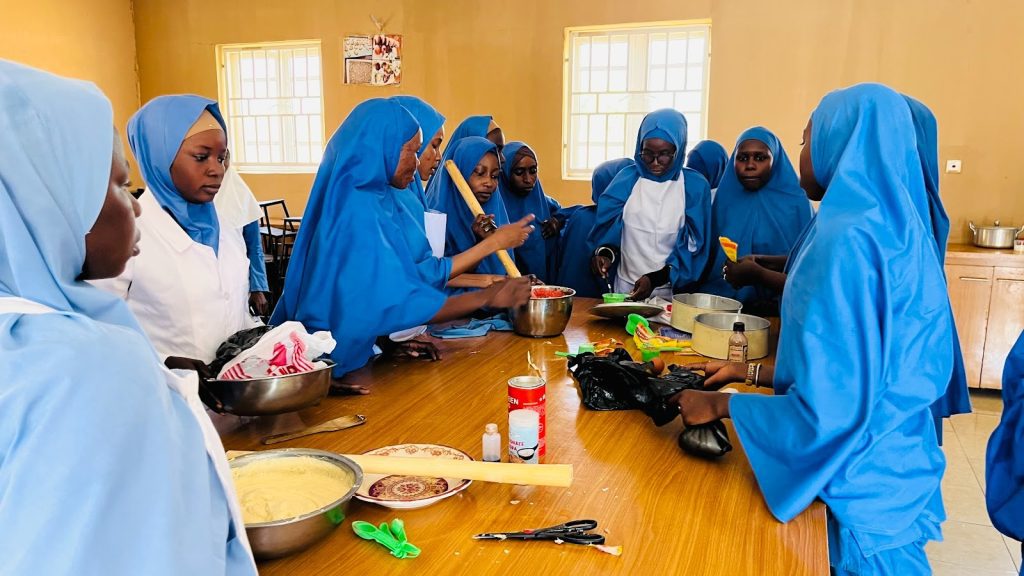
For many married adolescent girls in Kaduna State, education once felt like a closed chapter. Early marriage, poverty, and family pressure forced many of them out of the classroom long before they could complete their education.
Now, through the Second Chance Education Programme, many of these girls are finding their way back to school and rebuilding hopes they thought were lost.
The initiative, implemented under the Adolescent Girls Initiative for Learning and Empowerment (AGILE), is supporting girls and young mothers who dropped out of school due to early marriage, pregnancy, financial hardship, and other social barriers.
Across communities in Kaduna State, the programme is helping girls return to learning by providing school support materials, uniforms, and community sensitisation aimed at encouraging families to allow girls continue their education.
One of the beneficiaries, Halira Nuhu, was married off at the age of 12 after completing primary school. Now 15 years old and a mother, she has returned to school and is currently in junior secondary school through the programme.
According to her, community sensitisation and conversations with families helped change perceptions around girls’ education and encouraged her husband and parents to support her return to school.
Another beneficiary, Saude Maude, who left school because of poverty and early marriage, has also resumed her education and now hopes to build a better future for herself and her children.
Stakeholders say many girls in underserved communities still face enormous pressure to abandon education because of harmful gender norms, financial difficulties, and limited opportunities for girls.
The Kaduna State Government introduced the Second Chance Education Programme as part of efforts to ensure that girls who leave school are not permanently denied access to learning and future opportunities.
Speaking on the programme, education officials explained that the goal is not only to return girls to classrooms but also to create systems that support them to stay in school and complete their education successfully.
They added that practical support systems, including community engagement and flexible learning opportunities, are helping reduce the stigma often faced by married girls and young mothers returning to school.
Development partners working on the programme also emphasised the need for long-term investments in girls’ education, especially for vulnerable learners affected by poverty, child marriage, and insecurity.
For many of the girls, returning to school has restored confidence, dignity, and a renewed belief that their lives can still take a different direction.
Education advocates say programmes like this are critical in ensuring that marriage or motherhood does not permanently end a girl’s dreams or future opportunities.



More Stories
UK Launches Women in Tech Taskforce to Tackle Barriers to Career Growth
Oluwatoyin Falaiye: The Making of a Voice for Justice, Healing and Restoration
Ayomiposi Ogundipe: From Volunteering to Building Opportunities for Girls and Young People