
For millions of women and girls, menstruation can come with a difficult choice: spend money on essential menstrual products or manage without them.
Mary Sabo Olowoloba is working to change that reality.
As Chairman and Chief Executive Officer of Sana Pads Limited, Olowoloba is leading a Nigerian menstrual health company producing reusable sanitary pads designed to improve access to affordable menstrual products while reducing dependence on imported and disposable alternatives.
The company was established in response to the challenges surrounding menstrual product access in Nigeria, where limited access to safe and affordable products can affect girls’ education, women’s ability to work and the dignity of those managing their periods.
Olowoloba said the company deliberately chose to develop and manufacture its products locally rather than rely on imports.
“We didn’t want to import, we wanted a product made for Nigerian and African women, by Nigerians, and certified to the highest standards,” she said.
After years of product development and testing, Sana Pads now produces NAFDAC-certified reusable sanitary pads in different absorbency categories for different menstrual flows.
The products are designed to be washed and reused, offering women an alternative to single-use sanitary products. The company says its pads are made with breathable natural fabrics and without plastic top sheets, chemical bleaching or single-use absorbent gel layers.
For Olowoloba, however, the work is not simply about manufacturing a product. It is about making menstrual health solutions more accessible to women and girls who may struggle to consistently afford disposable products.
The company is therefore developing community-based distribution channels, including rural sales agents, market networks, supermarkets and partnerships with local and international organisations.
The approach is intended to take menstrual products beyond major urban centres and closer to the women and girls who need them.
The challenge is significant. The company cites estimates that about 50 million women and girls in Nigeria have limited or no access to hygienic menstrual products, while United Nations data has linked inadequate menstrual health support with girls missing school across sub-Saharan Africa.
This makes menstrual health more than a personal or household issue. It intersects with education, employment, health, poverty and gender equality.
For girls, the inability to manage menstruation safely and consistently can create barriers to full participation in school. For women, limited access to menstrual products can affect their ability to remain at work and participate fully in economic and community life.
Sana Pads is positioning local production as part of the response, while also seeking to create a product that is designed around the realities of Nigerian and African women.
Olowoloba said the company’s broader ambition is to make quality menstrual hygiene products accessible to every woman and girl in Nigeria and eventually across Africa.
“We are keeping girls in school, we are keeping women at work, and we are restoring dignity,” she said.
The story of Sana Pads also reflects a growing space for African women entrepreneurs to develop locally made solutions to problems that affect millions of women across the continent.
For Olowoloba, tackling period poverty begins with something practical: making it easier for women and girls to access menstrual products that are safe, affordable and suited to their realities.



More Stories
RGI to Host Period Party for Teens and Tweens in Lagos
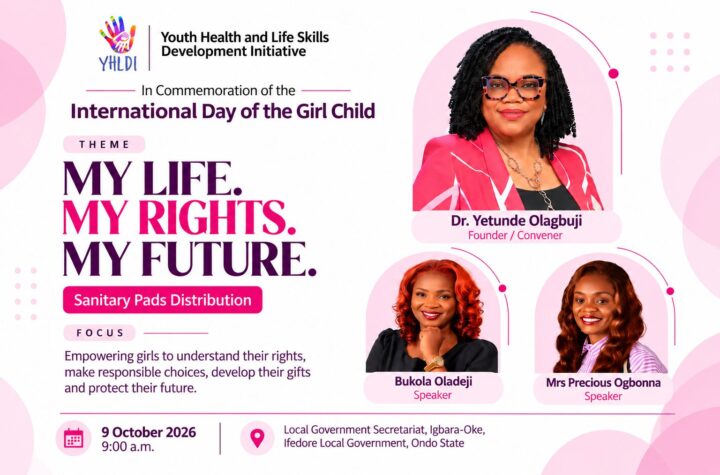
YHLDI to Mark International Day of the Girl Child With Girls’ Empowerment Event in Ondo
Beyond Enrolment: MAYEIN Calls for Action on the Barriers Keeping Oyo Girls in School