
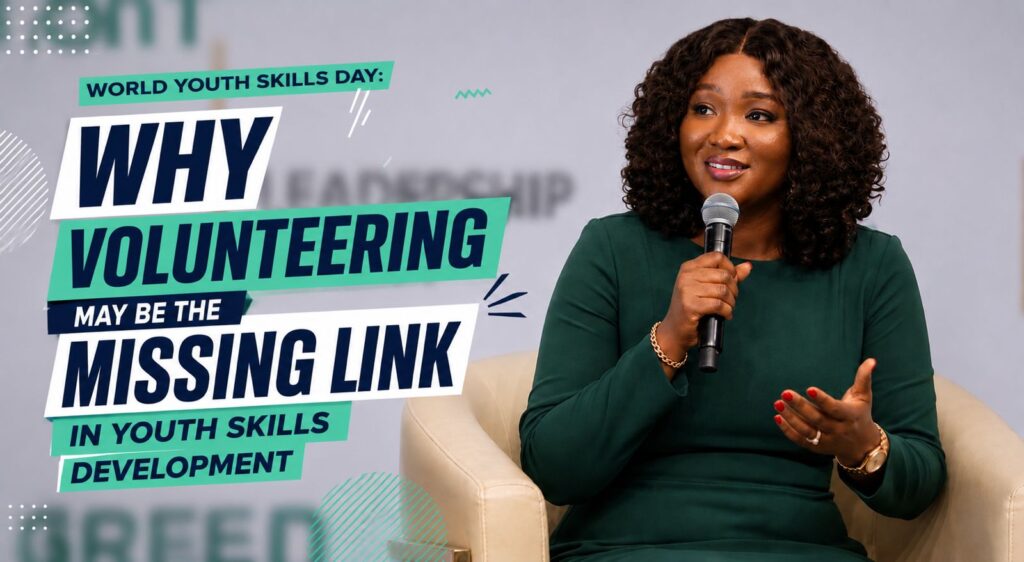
By Raquel Kasham Daniel
World Youth Skills Day 2026: What If We’ve Been Looking for Skills in the Wrong Places?
“How do I get experience?”
Over the last decade, I have probably been asked this question more than any other. Sometimes the question comes from a fresh graduate. Sometimes it comes from a young professional trying to transition into the development sector. Sometimes it comes from someone who has spent months applying for opportunities without a single response. But regardless of who is asking, the frustration is usually the same: “Every opportunity requires experience. But how do I get experience if nobody is willing to give me one?”
It is a fair question. In fact, I believe it is one of the greatest contradictions in today’s labour market.
We tell young people to acquire skills. We tell them to gain experience. We tell them to build their CVs. Yet, many of the very opportunities designed to help them grow are inaccessible because they already require experience. So we create a generation of capable young people standing outside the door, waiting for someone to let them in.
As the world marks World Youth Skills Day 2026, with the theme “Skills for a Shared Future,” I find myself asking a different question:
What if we have been looking for skills in the wrong places?
When conversations around youth skills come up, we often talk about coding, artificial intelligence, digital literacy, entrepreneurship, vocational education, and technical training. Those conversations are important. The world is changing rapidly, and young people need to be prepared for it.
But somewhere along the line, we began to equate skills development almost exclusively with formal learning. We measure learning by certificates. We celebrate qualifications. We count training hours. We proudly announce the number of people who completed a programme.
Yet employers continue to tell us something different. Across industries, employers consistently rank communication, teamwork, leadership, problem-solving, adaptability, emotional intelligence, and critical thinking among the most valuable competencies in today’s workplace.
The irony is that many of these skills are difficult to develop inside a classroom. They are developed by doing, by making mistakes, by leading people, by solving real problems, by working with communities, and by navigating uncertainty. In other words, they are developed through experience.
And that is why I believe one of the most overlooked skills development ecosystems in the world is volunteering.
For decades, volunteering has largely been presented as an act of kindness, something you do because you care, something you do to give back, or something you do when you have free time. While all of that is true, I believe it is incomplete.
Volunteering is not just an act of service. It is a learning environment.
Think about the young volunteer coordinating logistics for a community outreach. Without realising it, they are learning project management. The volunteer facilitating a training session is developing public speaking and communication skills. The volunteer working with people from different backgrounds is building cultural competence, empathy, and collaboration. The volunteer responding to unexpected challenges in the field is strengthening resilience and problem-solving.
These are not “volunteer skills.” These are future-of-work skills, the very skills employers say they need. Yet we rarely recognise volunteering as a legitimate pathway for developing them.The Missing Classroom
A few years ago, I began asking myself a question: Why do we celebrate internships as learning experiences but often dismiss volunteering as “just helping”? Both involve learning by doing. Both expose people to real-world problems. Both require responsibility, collaboration, and initiative. The difference is not necessarily the quality of the learning. The difference is the way we value it.
Perhaps we have underestimated volunteering because we have associated value only with activities that come with a salary. But learning does not always come with a payslip. Some of the most transformative learning happens in spaces where people are solving real problems, working with limited resources, and collaborating with others to create change. That is exactly what volunteering offers.
Over the years, I have worked with hundreds of volunteers. Some came looking for experience. Others came because they wanted to make a difference. Many arrived uncertain about what they had to offer.
But something remarkable happened over time. The shy volunteer became a confident facilitator. The graduate with no work experience became a project coordinator. The young person who simply wanted to “help” discovered strengths they never knew they had.
They did not just serve. They grew.
That experience fundamentally changed the way I think about volunteering. I no longer see it as an activity. I see it as an ecosystem for developing people. And perhaps that is the conversation we need to have more often.
This year’s World Youth Skills Day theme speaks about preparing young people for a shared future. A shared future will require more than technical competence. It will require empathy, collaboration, leadership, community, the ability to work across cultures, and the willingness to solve problems bigger than ourselves.
Ironically, these are the very qualities that meaningful service develops.
This is why I believe volunteering should no longer sit on the margins of conversations about employability. It should sit at the centre. Not because every volunteer will immediately find a job, but because every meaningful volunteer experience has the potential to build the competencies that shape careers, strengthen communities, and prepare young people for lifelong leadership.
Perhaps it is time for governments to think differently about national youth development strategies. Perhaps universities should begin recognising structured volunteering as part of graduate development. Perhaps employers should pay closer attention to meaningful volunteer experience rather than dismissing it as extracurricular. Perhaps nonprofits should become more intentional about training volunteers, not simply deploying them. And perhaps young people themselves should begin to see volunteering not as free labour, but as an investment in their own growth.
Because the future of work will not only belong to those with the most certificates. It will belong to those who know how to learn, collaborate, adapt, lead, and solve problems.
So maybe the question was never, “How do I get experience?”
Maybe the better question is, “Where can I begin building the skills that experience requires?”
For me, one answer has remained remarkably consistent.
Serve.
Not because service is easy. Not because it is unpaid. But because service teaches us things that no classroom ever can.
As we celebrate World Youth Skills Day, perhaps it is time we stopped thinking of volunteering as something young people do on the side. Perhaps it is time we recognised it for what it truly is:
One of the world’s most overlooked pathways to skills development.
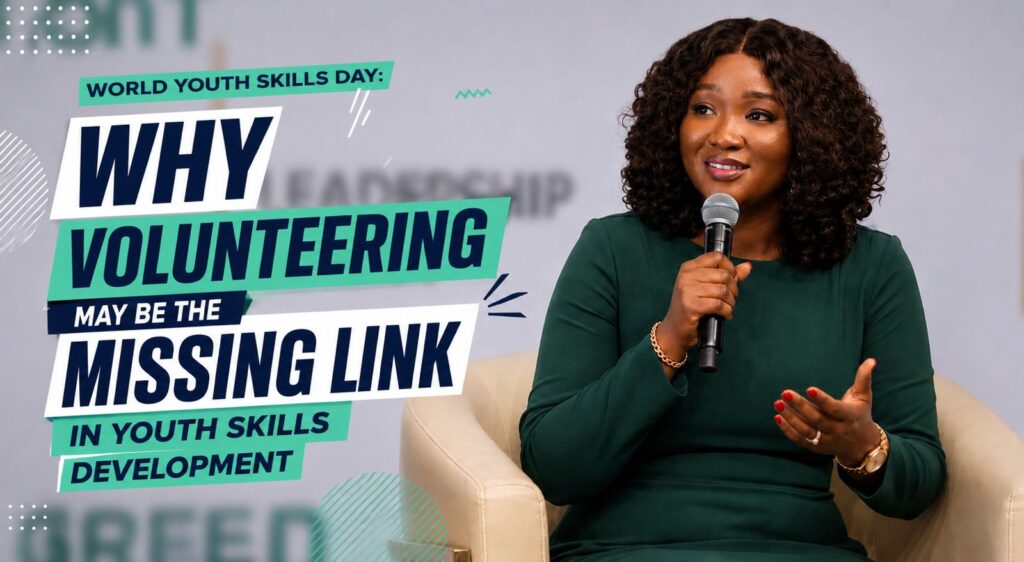
Raquel Kasham Daniel is a social entrepreneur and Creator of Voluserve, a platform using service as a pathway to learning, impact, and talent development. She is passionate about expanding access to volunteering and inspiring people to make service a way of life.



More Stories
Blessing Bassey Is Building Stronger Foundations for Children Through Education and Creativity
Access Bank Opens Applications for Womenpreneur Pitch-A-Ton Season 8, Targets 120 Women Entrepreneurs Across Africa
Ugandan AI Startup, SANDI AI Wins $50,000 to Help Farmers Access Finance